-
Product
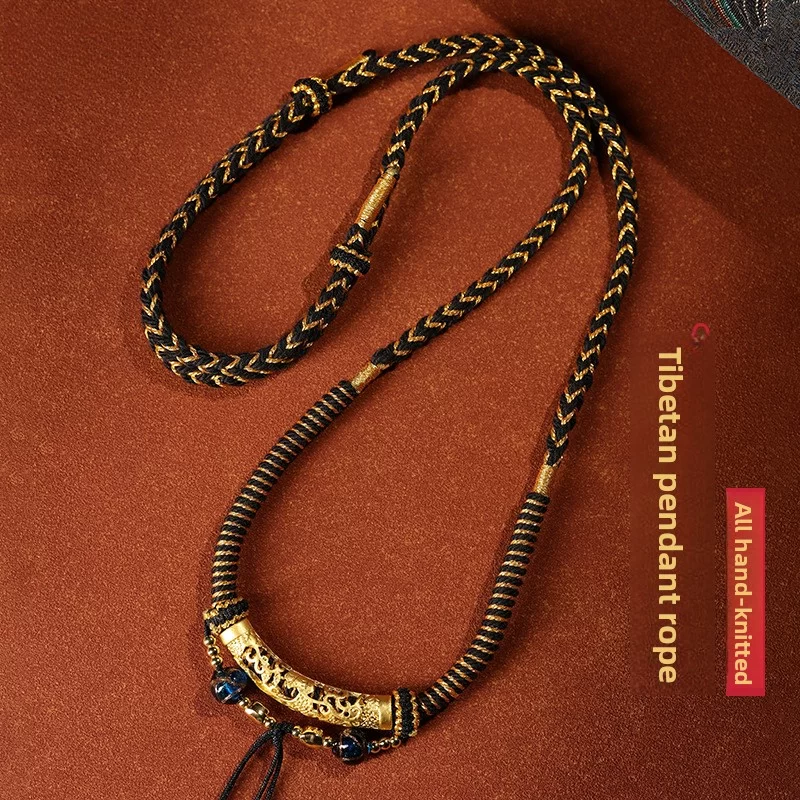
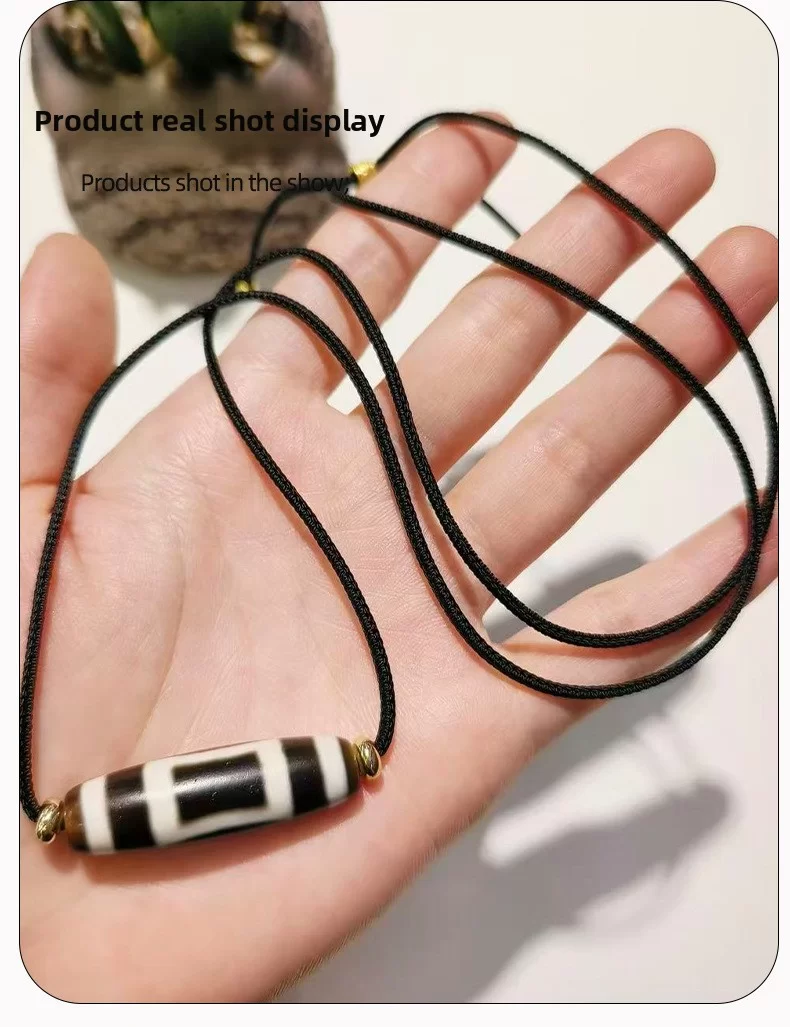
Tianzhu semi-finished hanging rope, cross neck, hand woven men’s and women’s necklaces, rope accessories, jade pendant rope
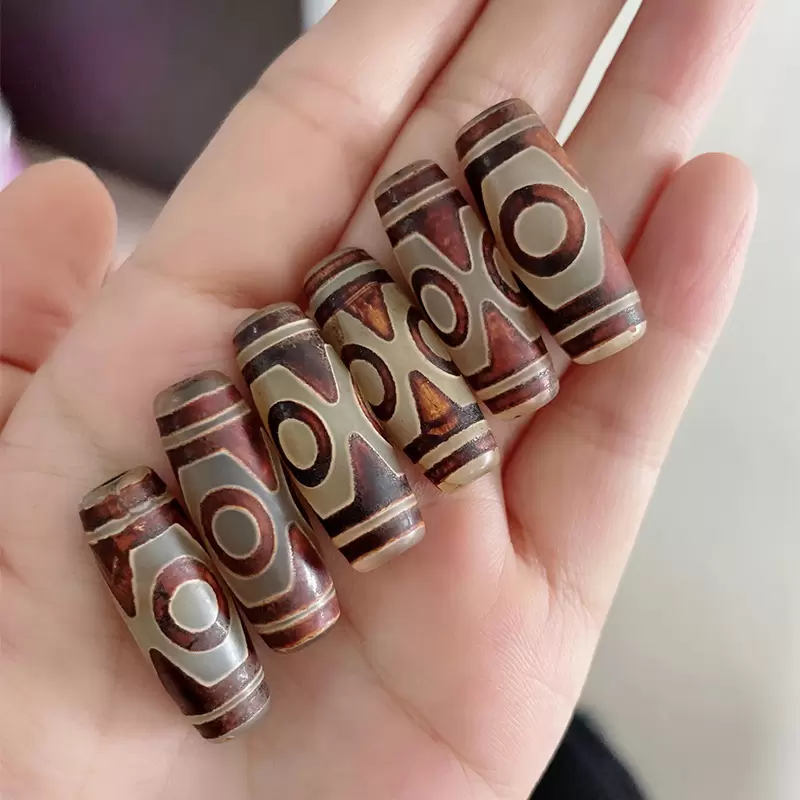
$259.00 – $399.00黑色玛瑙九眼天珠绿色玛瑙九眼天珠老旧九眼天珠咖色光面九眼黑色九眼天珠咖色磨砂九眼天珠绿色九眼天珠玉化九眼天珠做旧三眼绿色三眼Clear九眼天珠40mm九眼天珠30*11mm三眼30*11mm三眼40mmThe energy of celestial beads resonates with the unique traits of each zodiac sign: Aries pairs well with tiger-tooth beads to bolster courage, Taurus benefits from heaven-and-earth beads to stabilize wealth, Gemini finds balance with lotus beads for mental equilibrium, Cancer soothes emotions with water-pattern beads, Leo attracts benefactors through Aquarius beads, Virgo eases anxiety with nine-eyed beads. Libra harmonizes relationships with Bodhi beads; Scorpio overcomes obstacles with Vajra beads; Sagittarius focuses on goals with Wish-fulfilling beads; Capricorn finds direction with Star beads; Aquarius sparks creativity with Rainbow beads; Pisces enhances grounding with Three-Eyed Lotus beads.
Each choice of celestial bead resonates with millennia of culture. Whether you’re a dream-chasing pioneer, a soul-searching seeker, or simply yearning for peace, discover your own Tibetan blessing within the bead’s patterns. Let this spirit, spanning the ancient Zhangzhung civilization, safeguard every journey of your life. -
Product
Tibetan-style necklace cord, hand-woven thangka, Tibetan prayer bead pendant, Tibetan-style hand-twisted cotton rope, incense ash, glass beads, ethnic style
$99.99Dating back to the Tubo Dynasty, the ancestors of Tibet wove their reverence for nature and prayers for peace and prosperity into the crisscrossing threads of rope. This millennia-old craft of hand-braiding once served as a vital vessel for highland tribes to invoke blessings and auspiciousness. Using natural cotton and hemp, artisans mastered ancient techniques passed down through oral tradition and heartfelt instruction, weaving the essence of the snowy realm into each lift and press of the braiding tools.
Each braided cord holds unique Tibetan auspicious codes: the eight-strand braid signifies wealth from all directions, the vajra knot wards off evil spirits, and the flat knot carries peace and joy. The resilient strands endure the test of time without breaking, mirroring the Tibetan people’s steadfast faith. Their natural hues deepen with age, harmonizing perfectly with the warmth of Tibetan beads and the grace of pendants.
Adorned with cherished Tibetan beads or pendants, these strands transcend mere accessories—they carry millennia of Tibetan blessings close to the heart. The cord binds fortune, the beads carry auspiciousness, allowing this timeless craftsmanship to safeguard every moment of daily life with smoothness and well-being. -
Product
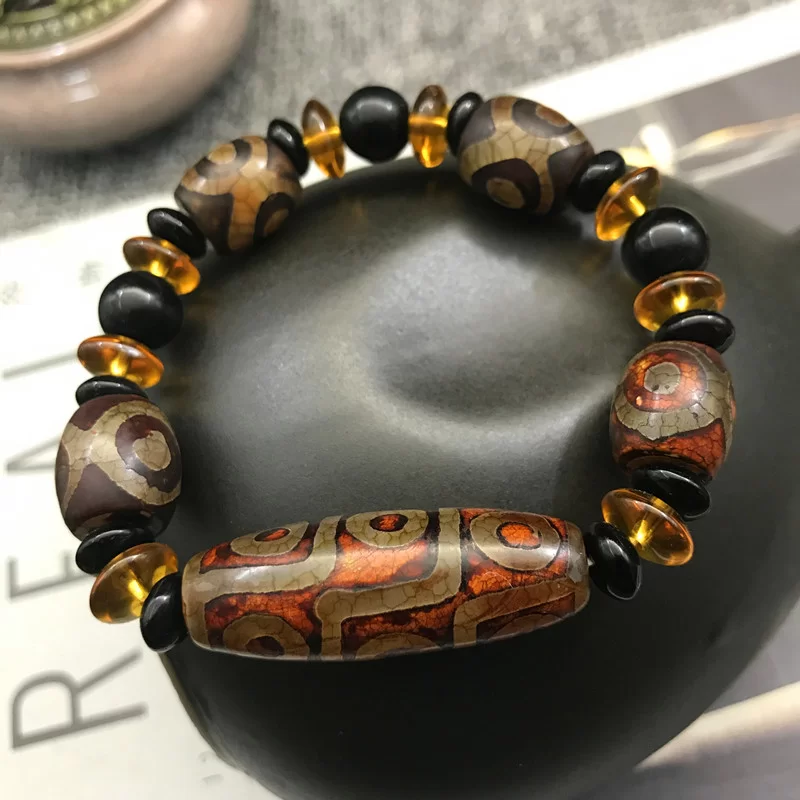
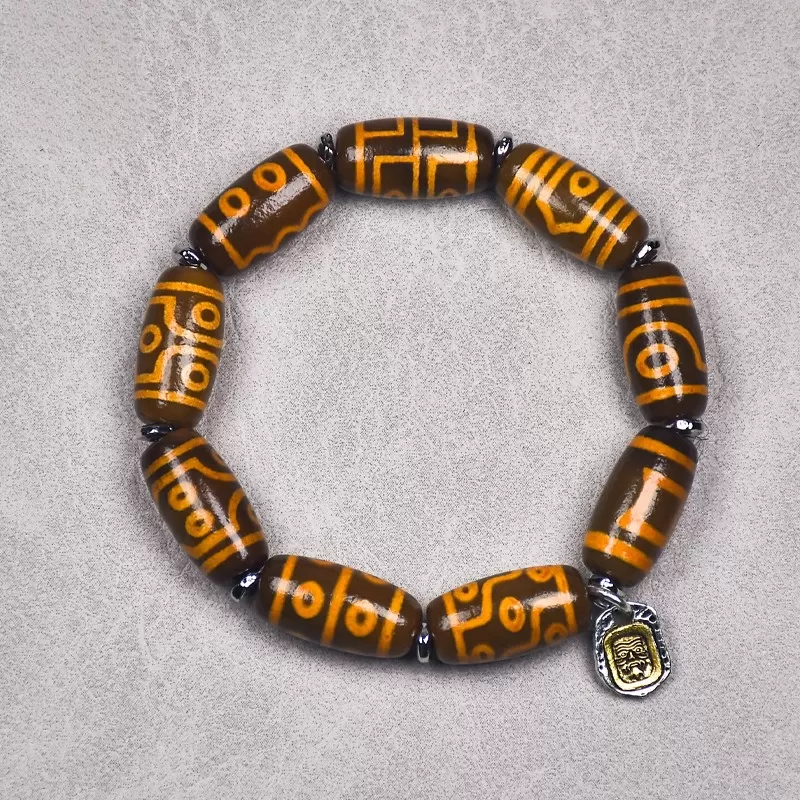
Tibetan Tianzu Tibetan-Style Agate Bracelet with One to Nine-Eyed Tianzu Beads
$299.00The Fearless Heavenly Bead is the “Talisman of the Warrior,” embodying the courageous spirit of the Tibetan people in confronting harsh natural environments. In folklore, it is regarded as an amulet that “subdues demons and wards off evil.” Tibetans wear it during long journeys, hunting expeditions, and business ventures, praying for protection from wild beasts, disasters, and human harm. It is especially suited for those who travel frequently and face challenges. The sword-shaped motif within its totem aligns with the ancient Zhangzhung civilization’s philosophy of “protecting life through courage,” embodying the spirit of “upholding justice and vanquishing evil.” The flame patterns symbolize “illuminating the world and dispelling darkness,” conveying the cultural essence of “overcoming adversity with courage and safeguarding peace with righteousness.”
In contemporary contexts, the Fearless Heavenly Bead has become a symbol of “inner strength,” resonating with scenarios demanding unwavering conviction—such as workplace competition or pivotal life transitions. It serves not only as a cultural vessel for the “robust beauty” of New Chinese style but also as a spiritual anchor for modern individuals battling anxiety and pushing personal boundaries—reminding wearers to confront life’s challenges with fearlessness, pursue ideals with courageous resolve, and transform the millennia-old “spirit of fearlessness” into spiritual armor for contemporary existence. -
Product
Natural Agate Loose Bead Pendant with Horse Shoe-Shaped Weathered Finish on a Tibetan Bead Necklace
$199.00The celestial treasure of the ancient Zhangzhung kingdom, a fashion legacy spanning three millennia—the celestial bead necklace pendant embodies the convergence of history and contemporary style. As early as 1,800 years ago during the ancient Zhangzhung period, the celestial bead served as an exclusive adornment for royalty and nobility, embodying the spiritual essence of Tibet as a ‘stone from the heavens.’ During the Tibetan Empire, it became a central sacred artifact in religious rituals. After enduring millennia of wind and sand, it evolved from temple offerings and aristocratic accessories into the modern consciousness. Today, this sacred artifact—encrypted with the ancient secrets of Zhangzhung civilization—sheds its weighty past. Transformed into the lightness of a necklace pendant, it bridges tradition and contemporary style. Each unique totemic pattern becomes a wearer’s ‘medal of history’.
-
Product
Tibetan Agate Tianzu Bead Bracelet Tibetan-Style Three-Eyed Bracelet Handcrafted Cultural Artifact
$99.99The relics of the ancient Zhangzhung Kingdom, legends of the snow-capped plateau—heavenly bead bracelets carry three millennia of civilizational codes. Archaeology confirms that during the ancient Zhangzhung period 1,800 years ago, heavenly beads had already become sacred objects exclusive to nobility, revered as “stones from heaven” circulating since the dawn of Tibetan civilization. From royal adornments of the Tibetan Empire to the foremost of the Seven Treasures in Tibetan Buddhism, they have traversed millennia of wind and sand, fusing the spirituality of ancient Zhangzhung with Tibetan devotion. Each celestial bead undergoes ancient craftsmanship—ground from natural minerals, steeped in herbal infusions, and consecrated through religious rituals. Their patterns, as unique as human DNA, stand as irreplaceable historical artifacts and a cultural legacy transcending time and space. ”
In a restless world, find steadfastness; in a noisy daily life, keep tranquility—the celestial bead bracelet is a sanctuary for the spirit. It is not merely an ornament, but a refuge for the soul, a ‘spiritual talisman’ for modern people to combat anxiety. The potent magnetic field of natural minerals purifies negative energy; the sacred symbolism of religious relics soothes weary souls. Whether you’re a hustler navigating the corporate jungle or a seeker cultivating inner peace, its presence offers strength. Wearing a Tibetan bead bracelet is an act of reverence for traditional culture, a longing for a better life, and an invitation for millennia-old faith to safeguard the present, letting Tibetan blessings warm the rest of your journey.”
-
Product
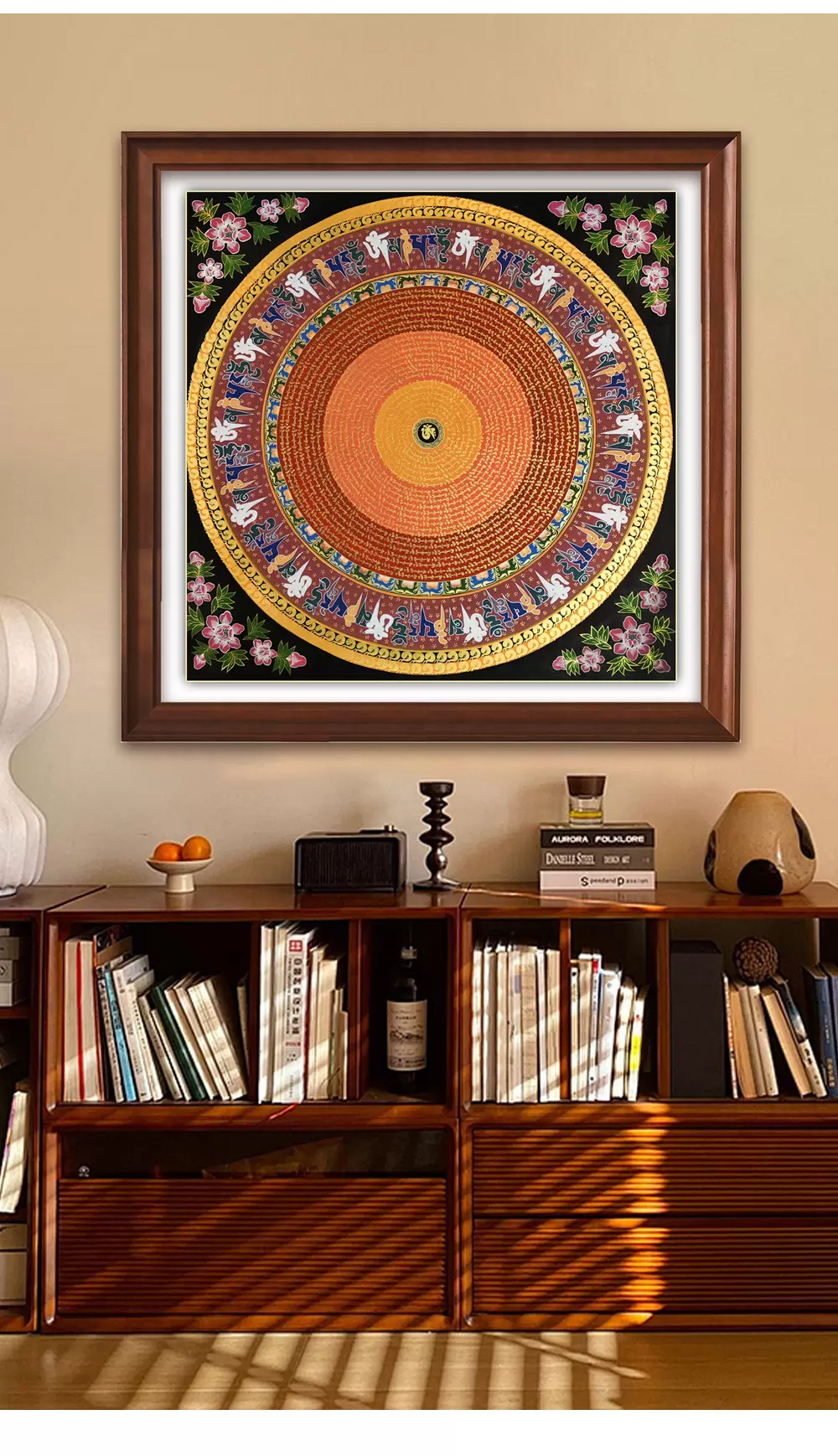
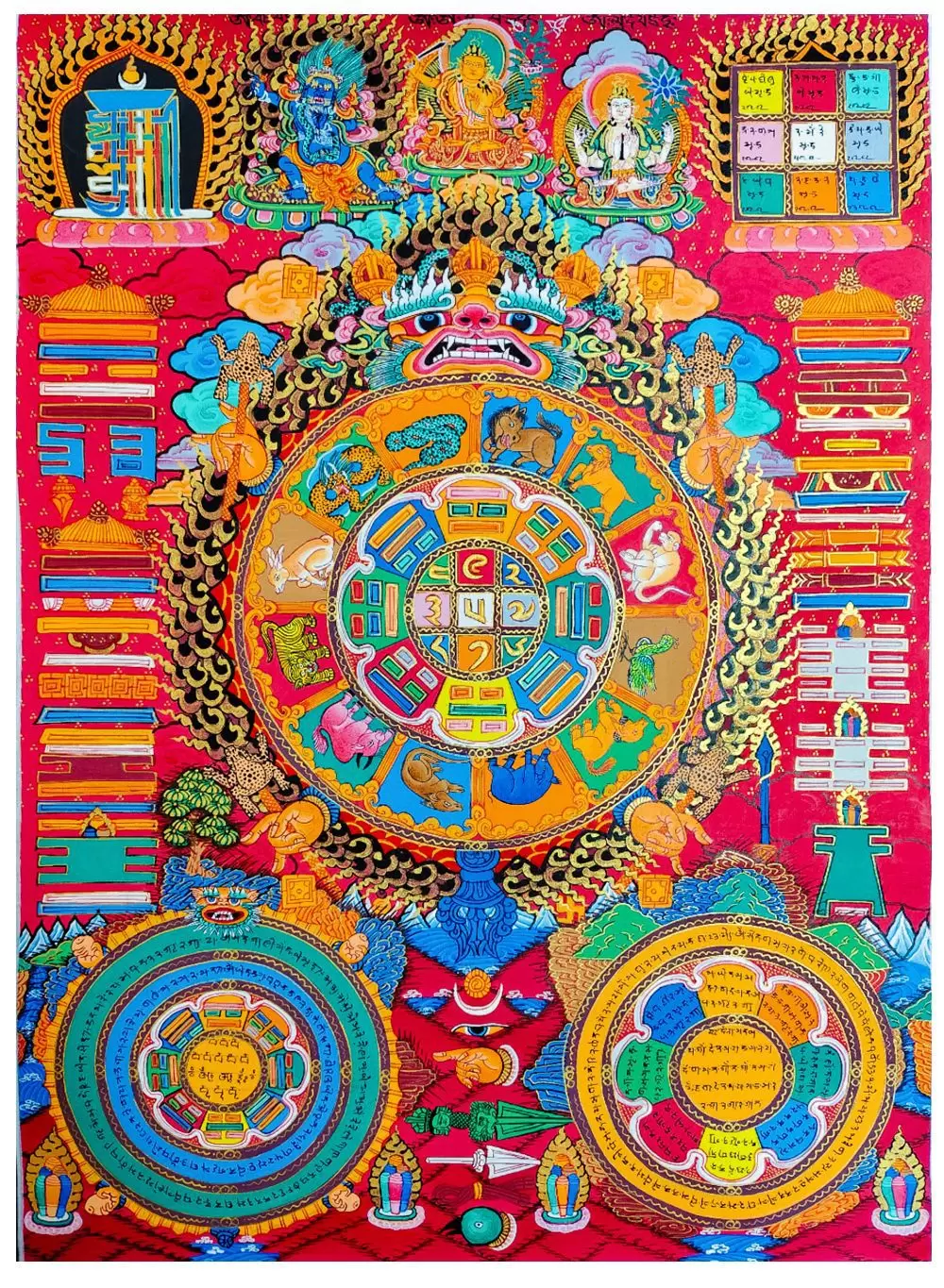
Hand-Painted Thangka: Six-Syllable Mantra Mandala with Eight Auspicious Symbols Decorative Painting 1-Meter Large-Scale Wall Hanging for Entrance Halls and Offices
$299.00We all seek a sense of peace to counter life’s restlessness; we all yearn for a guardian to shield us from the turmoil of the unknown. The Six-Syllable Mantra Thangka, imbued with the profound meaning of “Homage to the Jewel in the Lotus,” conveys blessings to “dispel calamities and fulfill virtuous aspirations.” Hand-painted warmth, faith spanning millennia—transcending religion and identity, offering only inner certainty. Hang it in your home for visual solace; chant the mantra for spiritual return—may you find serenity and strength amidst the world’s clamor.
Each thangka, each artist; each painting, each practice—every Six-Syllable Mantra thangka is hand-painted by Tibetan artists using traditional mineral pigments and natural adhesives. Following the full process of “sketching, outlining, coloring, gilding, and consecration,” each piece is unique and irreplicable. Imbued with millennia of Tibetan wisdom and the boundless merit of the Six-Syllable Mantra, these thangkas serve as both contemporary spiritual treasures for appreciation and daily use, and as cultural legacies for future generations. Collecting a thangka is not merely acquiring an artwork; it is safeguarding a blessing and faith that transcends time and space.” -
Product
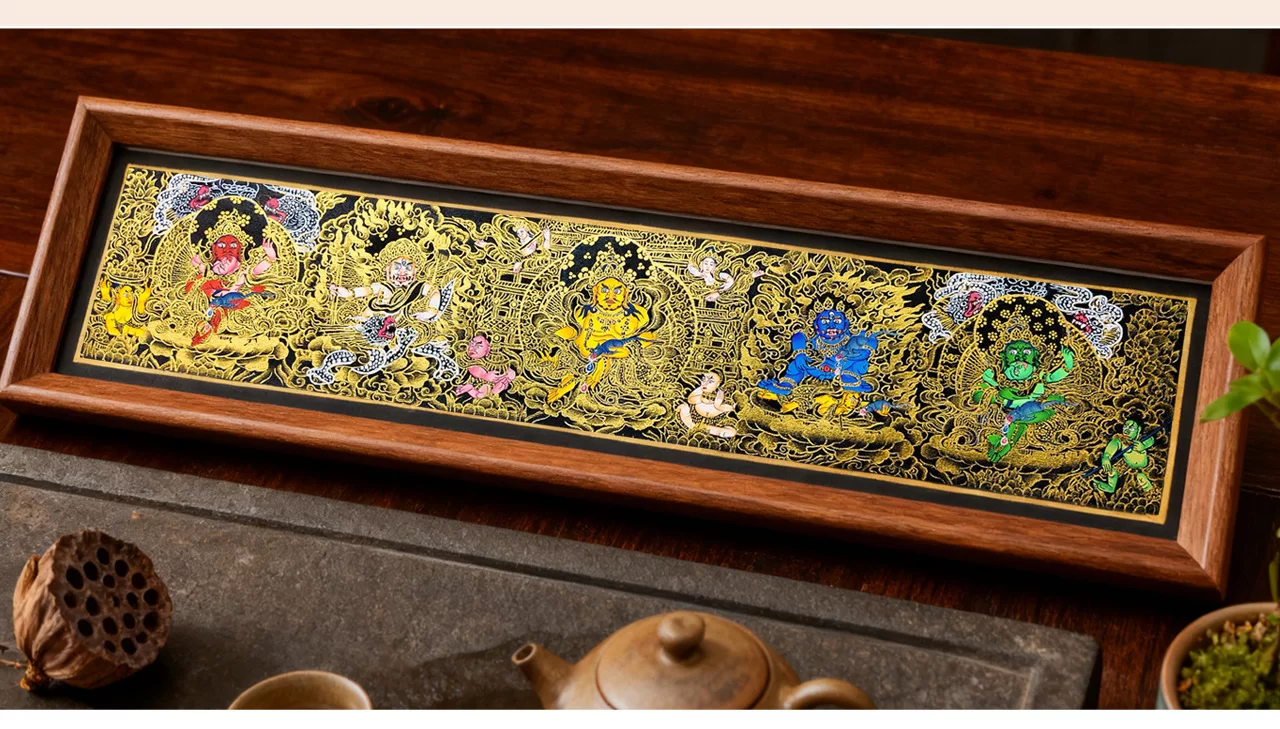
Tangka Yellow God of Wealth, Great Black Sky Buddha Statue, Hanging Painting, Desktop Display, Green Tara, Zakhilam, Wealth Attraction, Xuanguan Decoration Painting
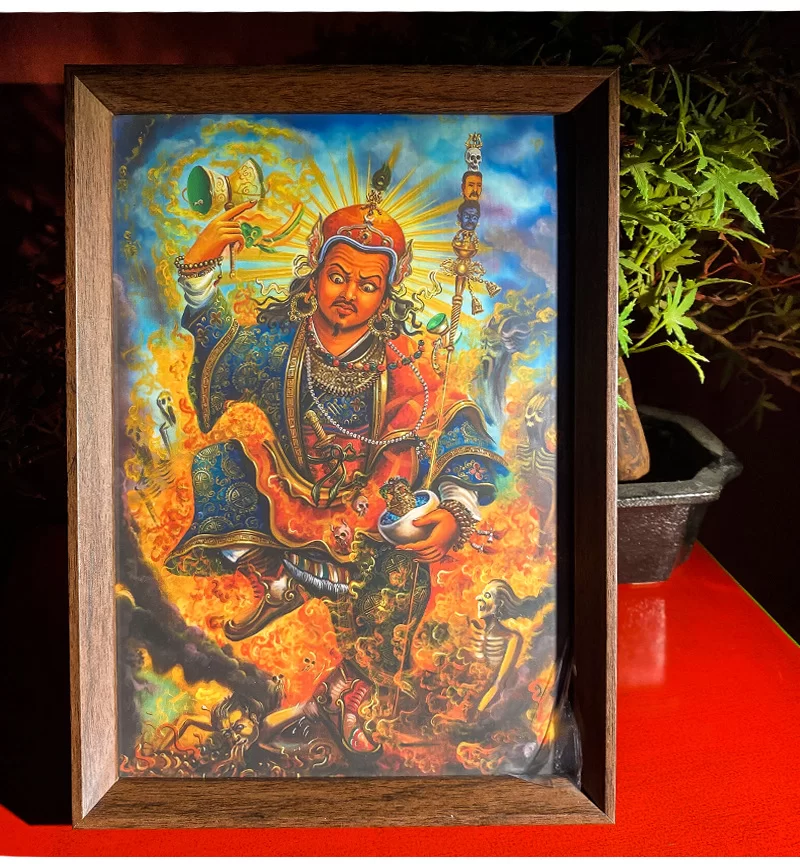
$99.00Thangka, phonetically translated from Tibetan as “cloth painting,” is a brilliant treasure of traditional Tibetan painting art. The prototype of the thangka tabletop display originated from the core characteristic of thangka art as “mobile murals.” The origins of thangka can be traced back to the 7th century during the reign of Songtsen Gampo. After he moved the capital to Lhasa, the development of agricultural civilization provided the material foundation for thangka creation, including cotton, hemp, silk, and cloth. The introduction of Central Plains and foreign cultures brought by Princess Wencheng and Princess Tricham further blended with the indigenous Bon religion of Tibet, giving birth to this unique art form. Legend has it that Songtsen Gampo painted an image of the goddess White Tara using his own blood from his nose. While the veracity of this tale remains unverified, it serves as a testament to the emergence of thangka art during this era.
Early thangkas were predominantly large scrolls, primarily serving the religious practices of Tibetan Buddhism. They were designed for devotees to carry with them for worship, fulfilling the need for portable devotion in nomadic lifestyles. As time progressed, thangka art evolved continuously. It saw initial development during the Early Propagation Period of Tibetan Buddhism, experienced a revival in the Later Propagation Period, and reached its zenith during the Ming and Qing dynasties. This period witnessed the emergence of numerous painting schools—including those from Ü-Tsang, Tsangpo, Amdo, and Kham—with artistic styles becoming increasingly refined. The emergence of thangka tabletop displays represents a clever fusion of traditional thangka art with modern living spaces. They distill the core techniques and cultural essence of traditional thangkas, condensing large scroll works into exquisite tabletop ornaments. This preserves the sacredness and exquisite craftsmanship of thangkas while adapting them to contemporary home and office display needs, allowing this millennia-old religious art to step beyond monastery chapels and become accessible, everyday cultural treasures.
Tangka tabletop pieces uphold the essence of traditional Tangka production, adhering to ancient methods from pigment selection to painting and mounting: pigments predominantly utilize natural minerals (lapis lazuli, malachite, cinnabar) and plant dyes, yielding rich, enduring hues that age gracefully; The painting process follows strict iconographic measurements, resulting in delicate, flowing lines and a composition that is both rigorous and solemn. Themes draw from classic religious elements like Buddhas, Bodhisattvas, Dharma protectors, and the Eight Auspicious Symbols, while also innovatively incorporating Tibetan landscapes and folk life. This blend of religious sanctity and cultural aesthetic value transforms each piece into a “miniature art sanctuary” embodying the millennia-old cultural heritage of Tibet. -
Product
Five-to-six-petal size Bodhi seed bracelet with burst-fleshed beads Men’s and women’s red-hued bracelet
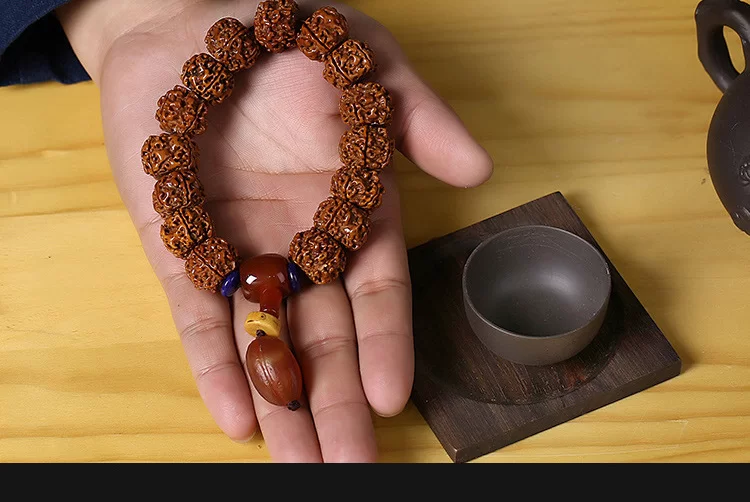
$159.00Rudraksha, known in Sanskrit as Rudraksha, derives from Rudra (Lord Shiva) and Aksha (eye/tear). Originating as the tears of Lord Shiva in Hinduism, it embodies the divine power of destruction and rebirth. Its true form is the hard seed of the round-fruited duying tree (Ficus microcarpa), primarily cultivated in Nepal, India, and the tropical regions of Southeast Asia. Its dense texture and vigorous grain make it naturally suited for handling and chanting.
Within religious contexts, it serves as the core mala beads of Vajrayana Buddhism, used for chanting mantras, meditation, and counting, embodying the practice’s essence of “diamond-like indestructibility, shattering obstacles to enlightenment.”
A thousand years of Bodhi resonance, a single thought of Vajra heart. Originating from the divine gift of Shiva’s tears, inheriting the orthodoxy of Vajrayana ritual implements, passed down through the Liao and Song dynasties, and cherished through the Ming and Qing eras, it transforms into a strand of Vajra Bodhi in the palm. Vajra symbolizes indestructibility, shattering afflictions and dispelling evil disturbances; Bodhi represents enlightenment and wisdom, enhancing blessings and wisdom roots to attain perfect realization. As you handle it, its grain grows lustrous and develops a patina, becoming both a refined cultural artifact steeped in time and a portable talisman for blessings. Its natural spiritual essence safeguards a lifetime of smooth fortune.
Vajra Bodhi seeds are the hard currency of the cultural artifact world and a favorite among collectors. Their natural seed kernels feature unique textures with distinct ridges, a hard yet durable quality that grows more refined with handling. From its raw, unpolished state to its jade-like patina, each grain records the meditative journey of handling, while every layer of luster carries the warmth of time. Blending religious cultural depth with collectible value, it signifies refined taste when worn and carries profound meaning as a gift. Holding one strand fulfills three purposes: handling, blessing, and collecting.
Forged from divine tears into diamond-hard power, blessed by bodhi for lasting well-being. Diamond Bodhi seeds inherently ward off evil and dispel misfortune, shielding against gossip, avoiding petty adversaries, and safeguarding peace. The bodhi heart radiates wisdom’s luminous grace, fostering career success, family harmony, and enduring blessings. Multiple petals hold auspicious omens. Wearing it daily is like having a Vajra guardian by your side—accumulating blessings day by day, ensuring health year after year. It serves as your personal protection and makes an exquisite gift for loved ones. -
Product
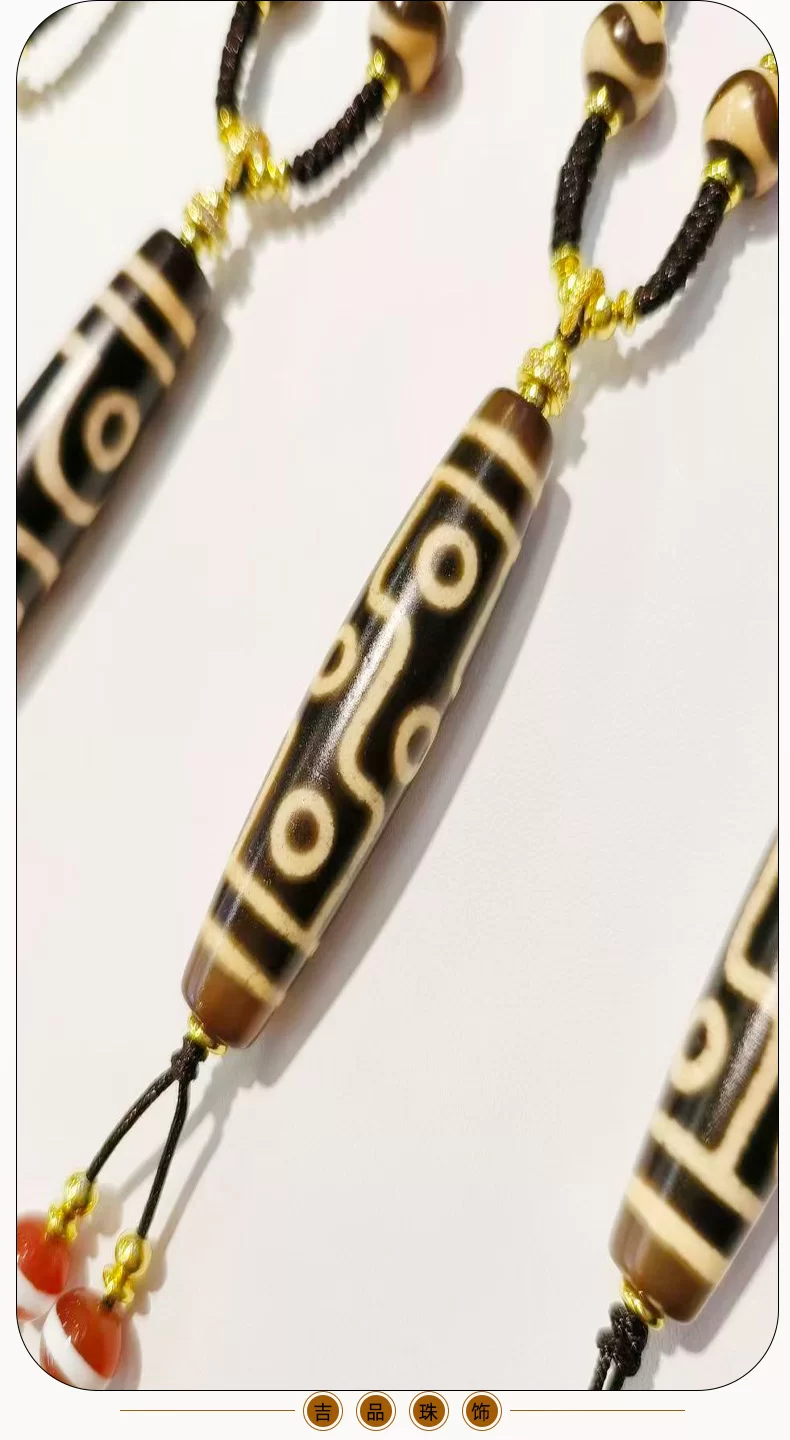
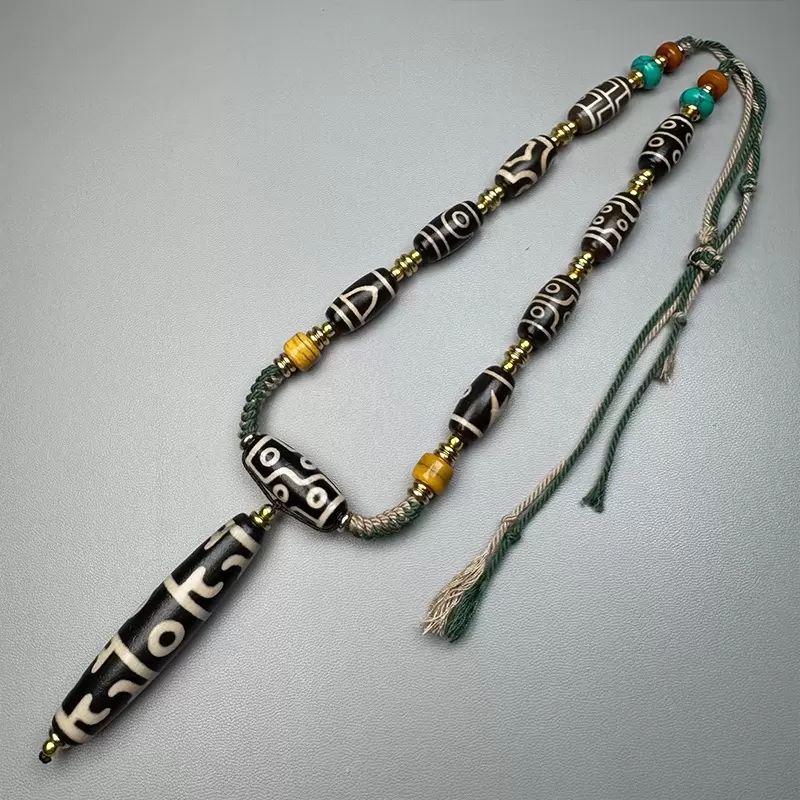
Hand-Braided Choker Necklace with Nine-Eyed Tibetan-Style Natural Agate Tian Zhu Beads
$99.99Throughout the historical development of Tibetan culture, celestial beads have appeared in various forms, objectively reflecting their significant place within Tibetan culture. With a long history and enduring reverence among Tibetan people, many families possess heirloom celestial beads passed down through generations. For Tibetans, these beads symbolize identity and status. In the hearts of Tibetans and spiritual practitioners alike, celestial beads are considered the finest offerings and the most potent protective talismans. Nearly everyone aspires to obtain a thousand-year-old, pure celestial bead.
-
Product
Tibetan Tianzu Beads Weathered Family Portrait Tianzu Bracelet Tibetan Buddhist Bracelet Jewelry
$59.00In the hearts of Tibetans and spiritual practitioners, the celestial bead is the most sacred offering and the most potent protective talisman. Nearly everyone aspires to obtain a thousand-year-old, pure celestial bead.
-
Product
Custom Thangka Painting
$99.99The history of thangka painting began in the eighth century in Tibet, Nepal, and India. It spread to the Mongol Empire in the thirteenth century and to China in the fourteenth century.
Tibetan art is predominantly ceremonial in nature. Its most common use accompanies religious rituals. The primary purposes of Tibetan thangkas can be divided into two categories: teaching and meditation. Typically depicting Buddhist deities, they also portray Buddhist narratives or scenes, illustrating the life of the Buddha or Tibetan historical contexts, and showcasing quintessential Tibetan landscapes. It is precisely through adherence to these practices that the thangka art of Tibetan Buddhism gains sacred power. Thus, you can use it to support your spiritual cultivation. It displays the Buddha in various states of mind: meditating, preaching, teaching, or supported by other deities. He also appears in scenes involving humans and animals. -
Product
Hand-Painted Thangka Yellow Wealth God Table Ornament Black and Gold Five Paths Wealth God Decorative Painting Exquisite Decorative Piece
$299.00The history of thangka painting began in the eighth century in Tibet, Nepal, and India. It spread to the Mongol Empire in the thirteenth century and to China in the fourteenth century.
Tibetan art is predominantly ceremonial in nature. Its most common use accompanies religious rituals. The primary purposes of Tibetan thangkas can be divided into two categories: teaching and meditation. Typically depicting Buddhist deities, they also portray Buddhist narratives or scenes, illustrating the life of the Buddha or Tibetan historical contexts, and showcasing quintessential Tibetan landscapes. It is precisely through adherence to these practices that the thangka art of Tibetan Buddhism gains sacred power. Thus, you can use it to support your spiritual cultivation. It displays the Buddha in various states of mind: meditating, preaching, teaching, or supported by other deities. He also appears in scenes involving humans and animals.
购物车