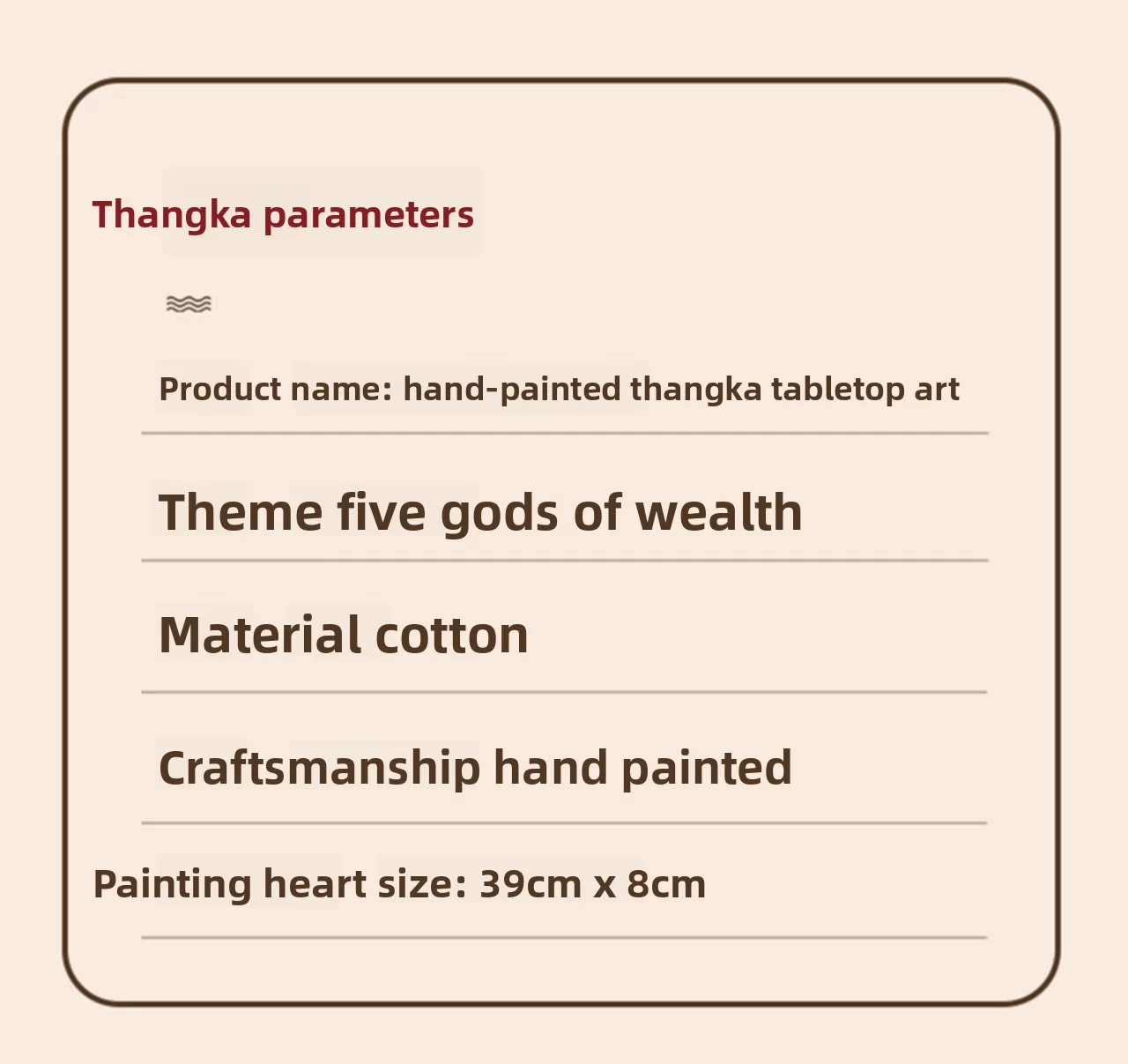
| Material | Xuan paper | Frame Material | Woodgrain Frame |
|---|---|---|---|
| Processing Technology | Hand-drawn | Style | Original Design |
| Dimensions | 16.5 in*5.9 in | Place of Origin | China |
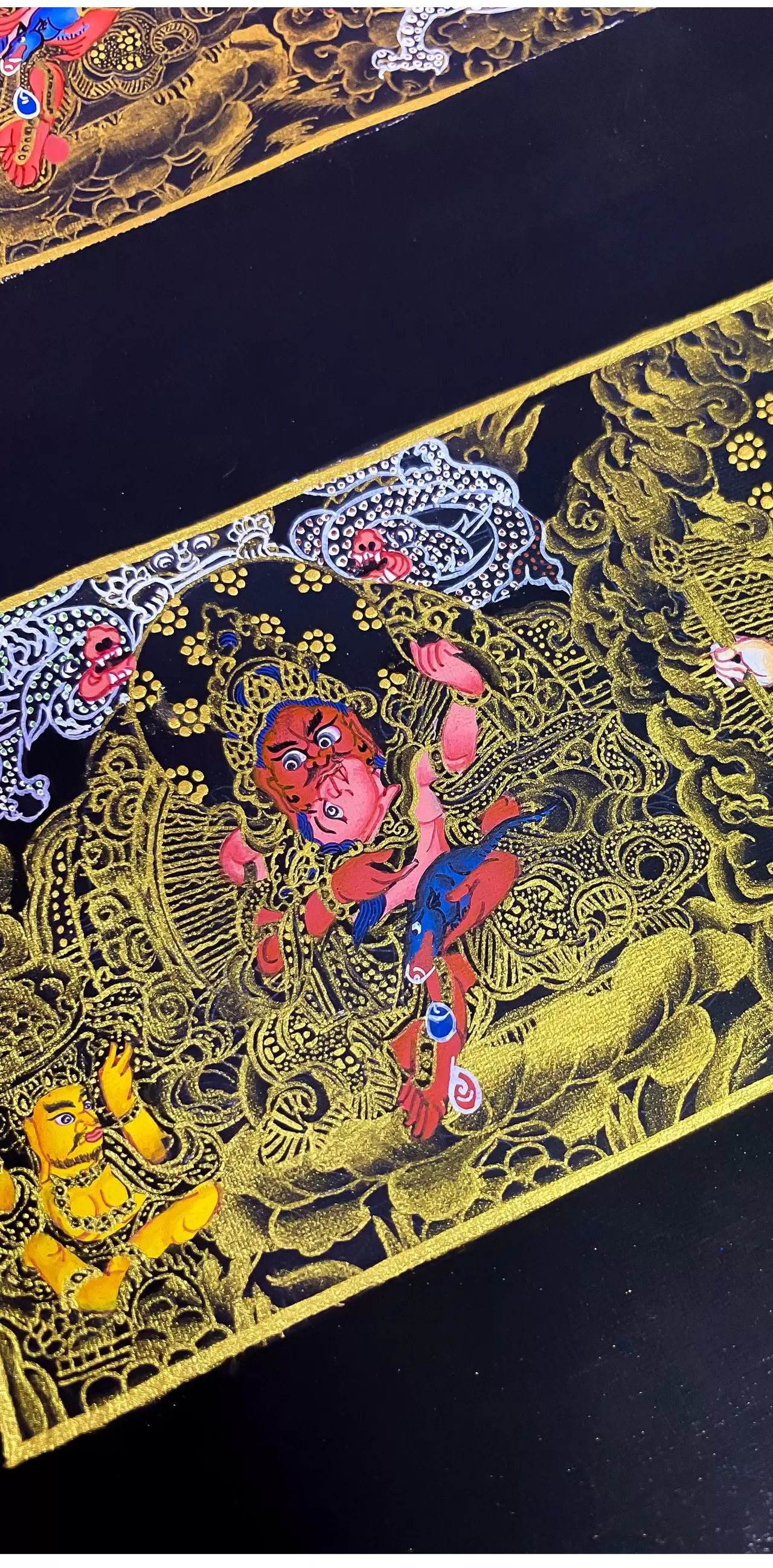
$299.00
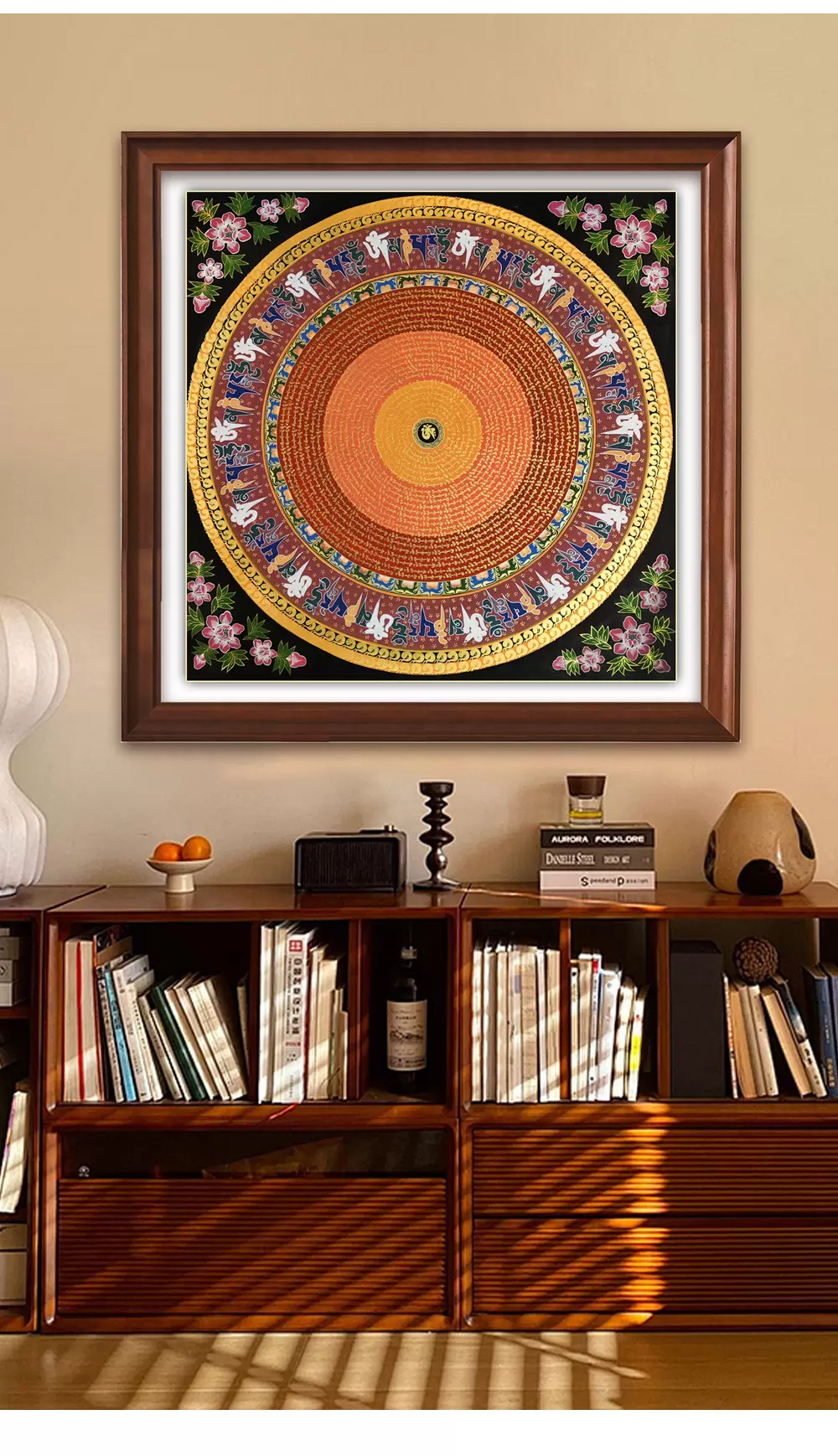
The history of thangka painting began in the eighth century in Tibet, Nepal, and India. It spread to the Mongol Empire in the thirteenth century and to China in the fourteenth century.
Tibetan art is predominantly ceremonial in nature. Its most common use accompanies religious rituals. The primary purposes of Tibetan thangkas can be divided into two categories: teaching and meditation. Typically depicting Buddhist deities, they also portray Buddhist narratives or scenes, illustrating the life of the Buddha or Tibetan historical contexts, and showcasing quintessential Tibetan landscapes. It is precisely through adherence to these practices that the thangka art of Tibetan Buddhism gains sacred power. Thus, you can use it to support your spiritual cultivation. It displays the Buddha in various states of mind: meditating, preaching, teaching, or supported by other deities. He also appears in scenes involving humans and animals.
| Material | Xuan paper | Frame Material | Woodgrain Frame |
|---|---|---|---|
| Processing Technology | Hand-drawn | Style | Original Design |
| Dimensions | 16.5 in*5.9 in | Place of Origin | China |
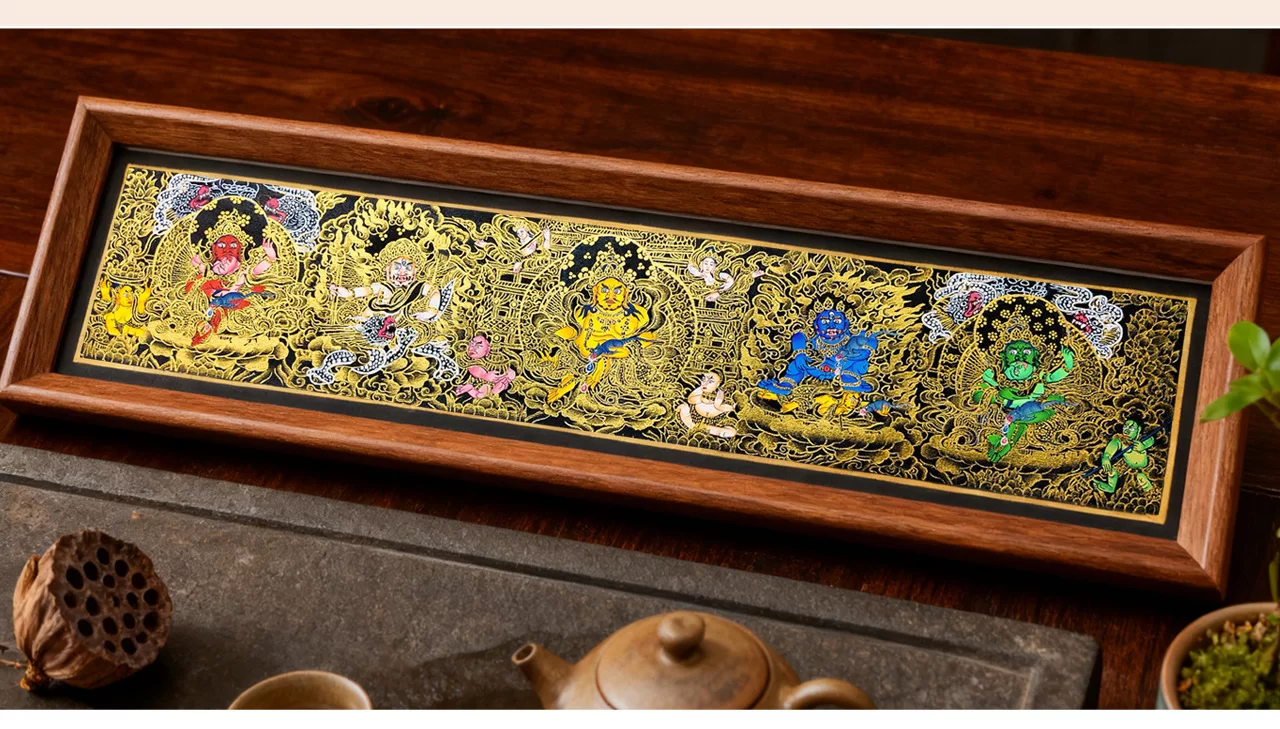
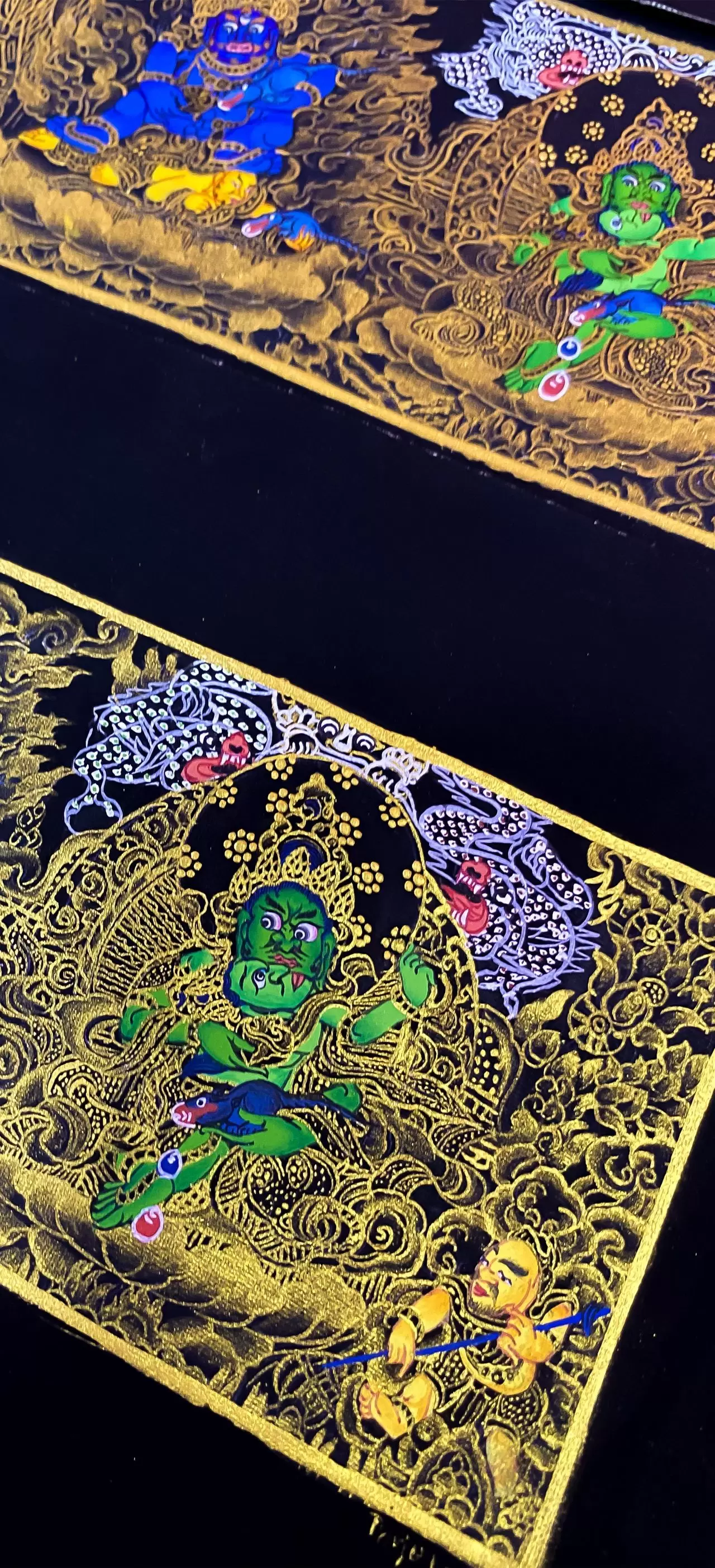
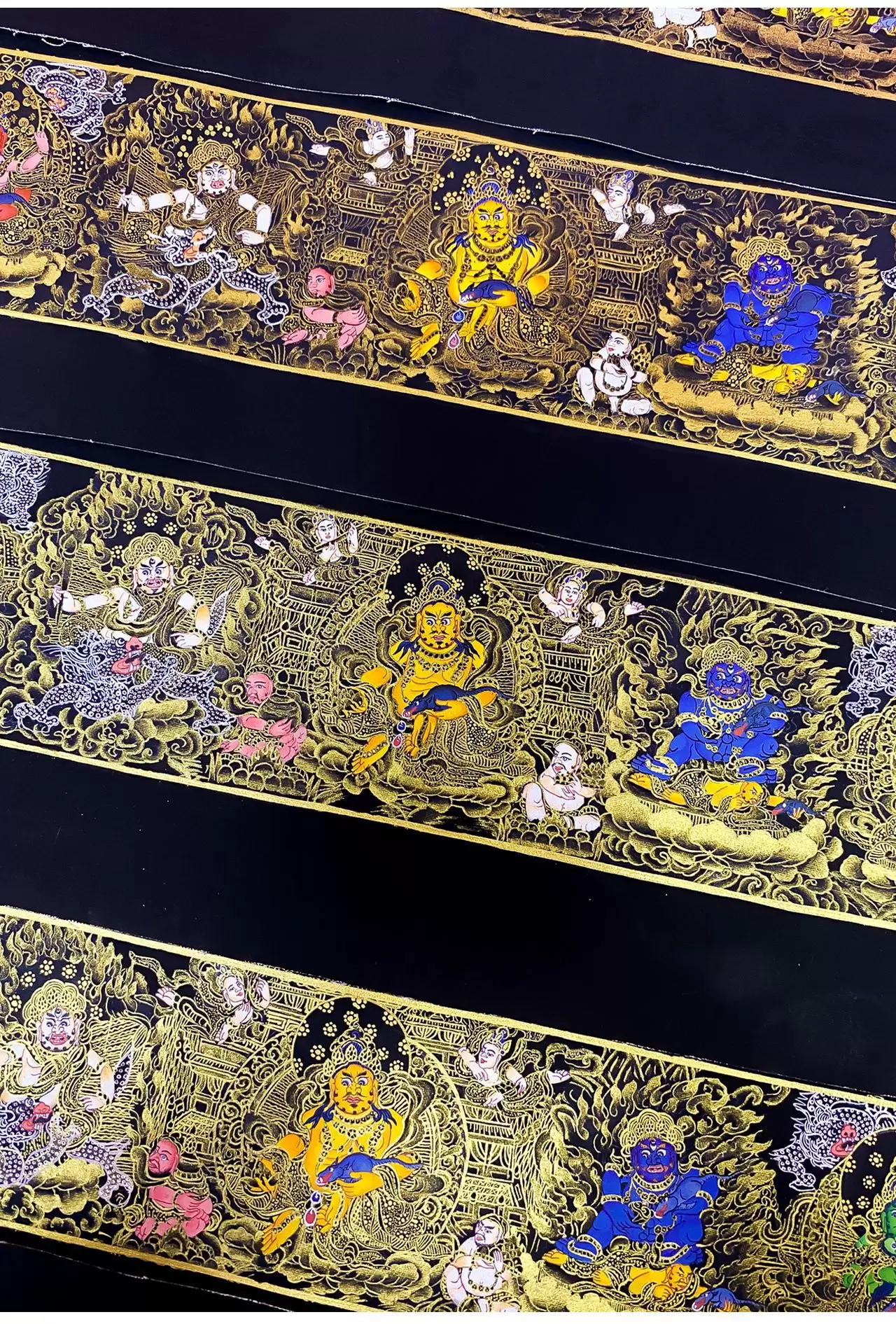
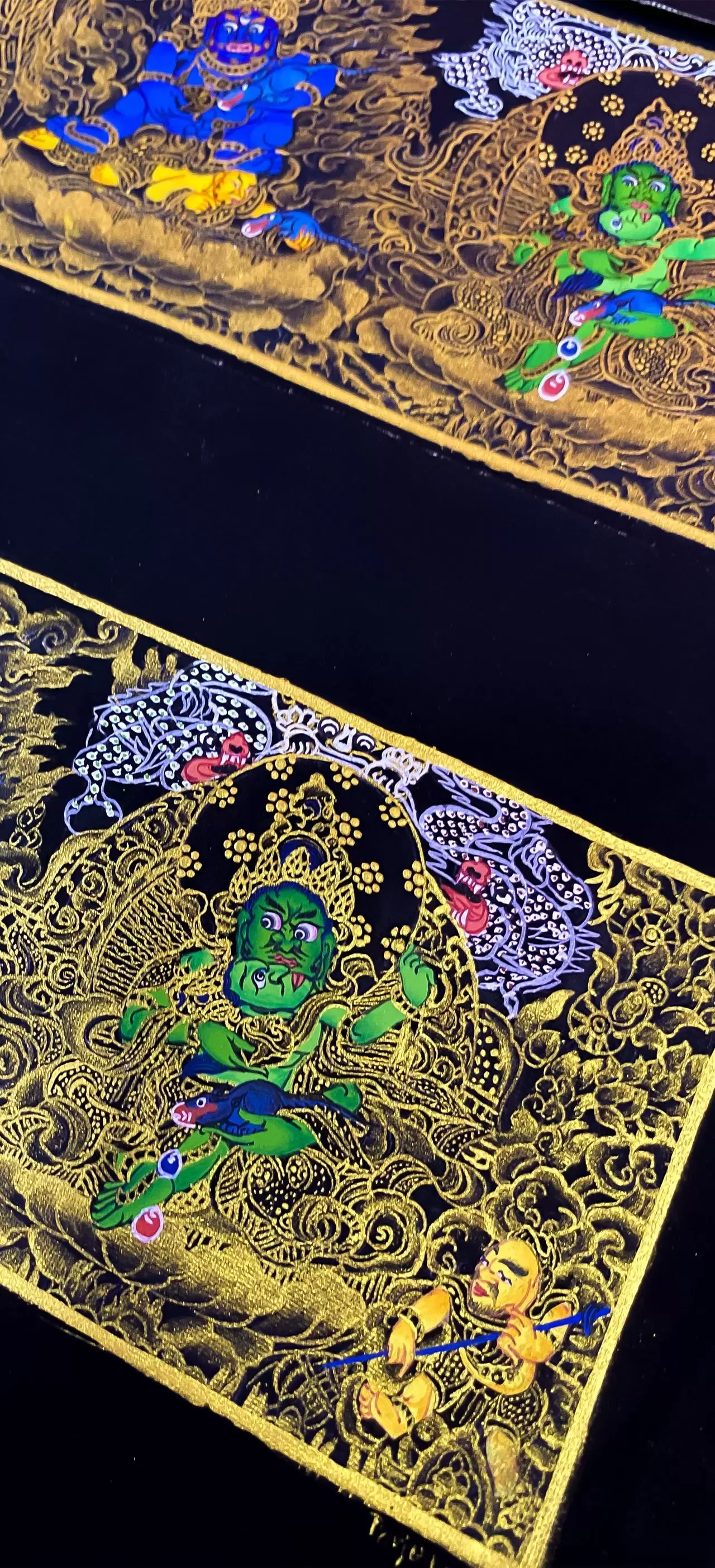
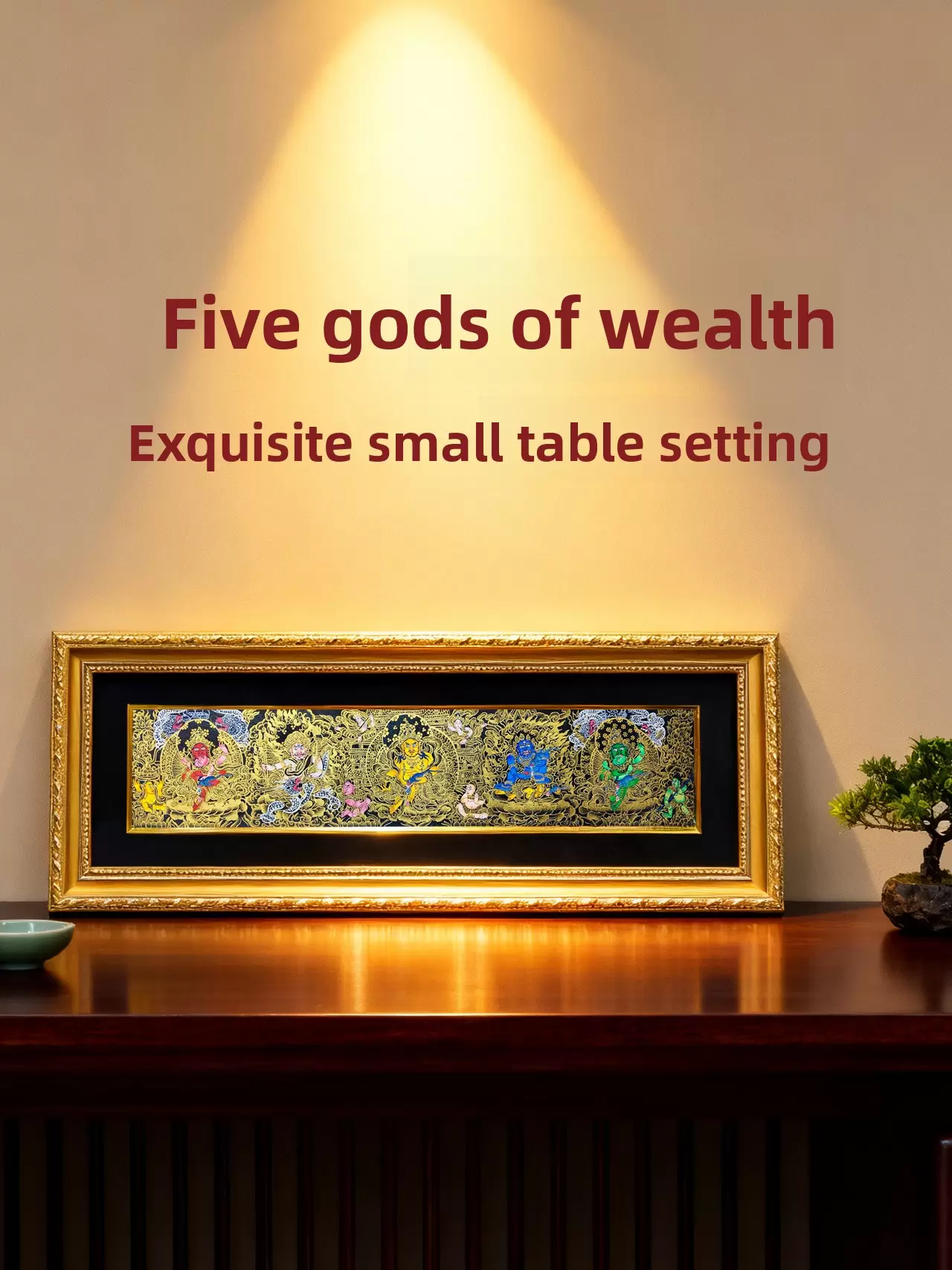
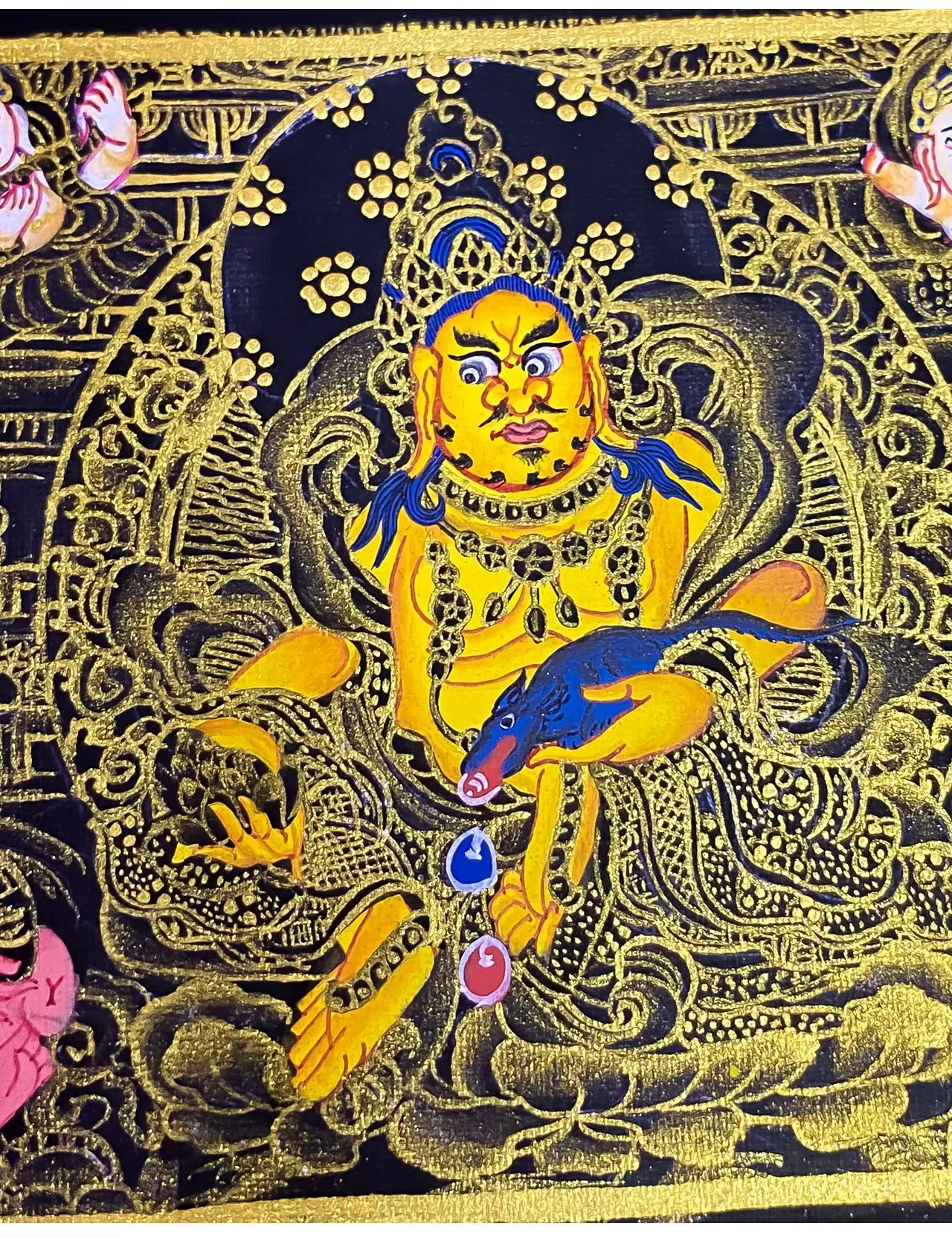
Hand-Painted Thangka Yellow Wealth God Table Ornament Black and Gold Five Paths Wealth God Decorative Painting Exquisite Decorative Piece