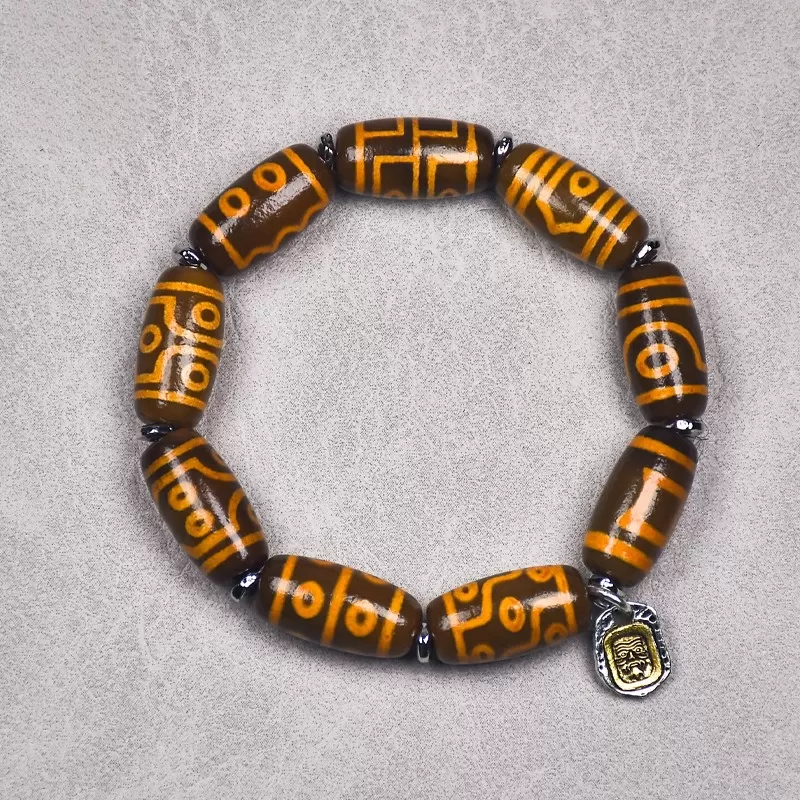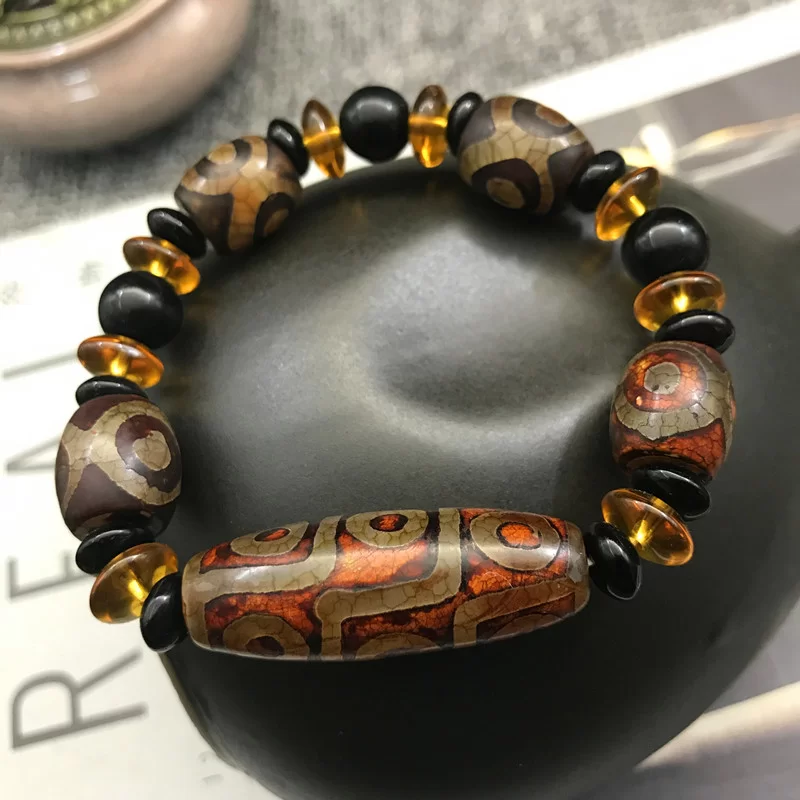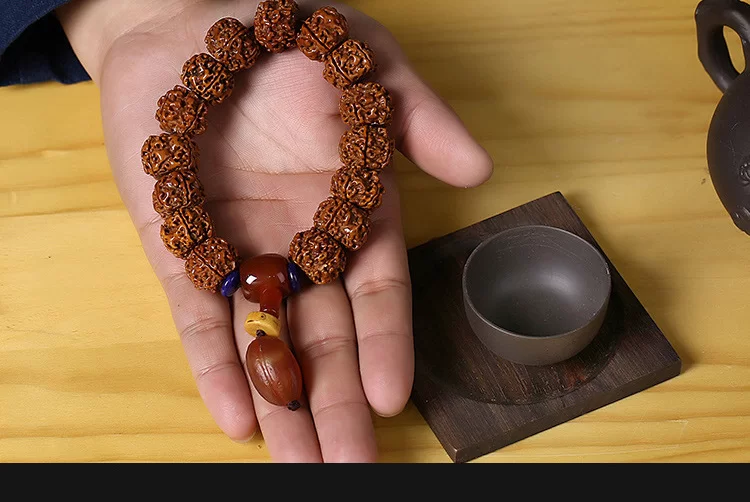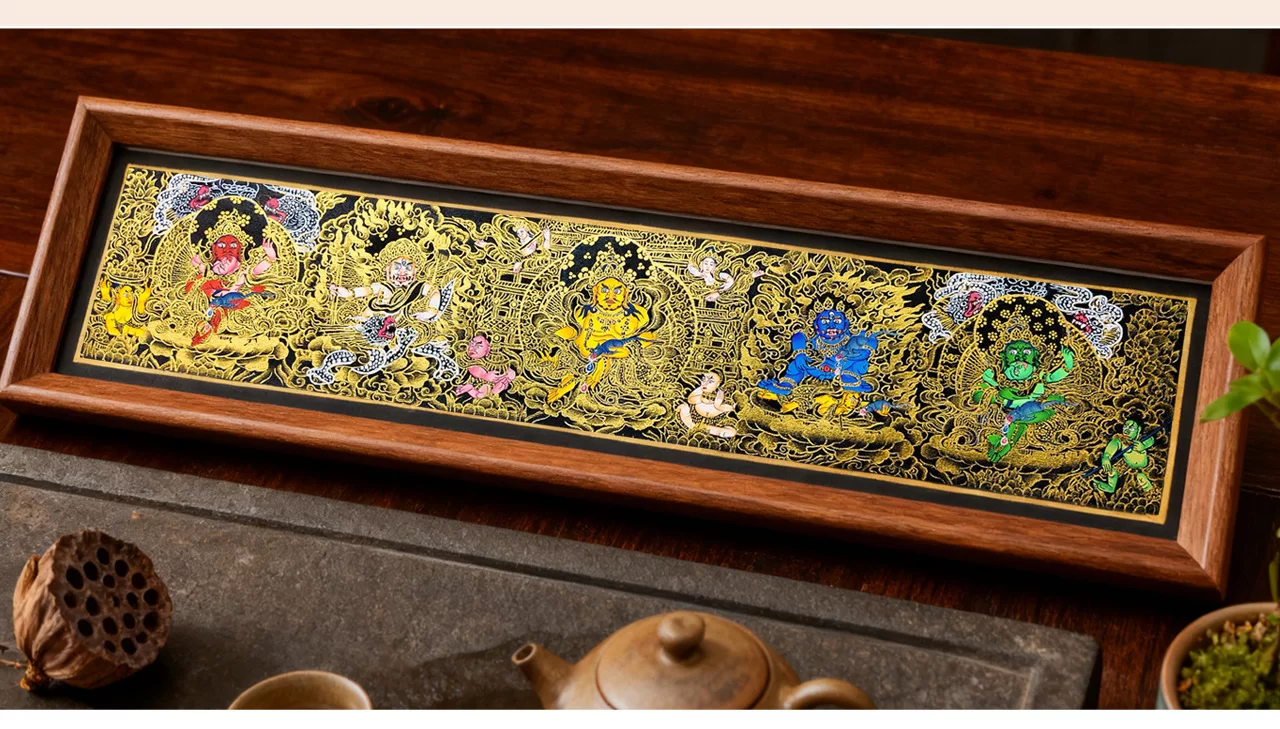
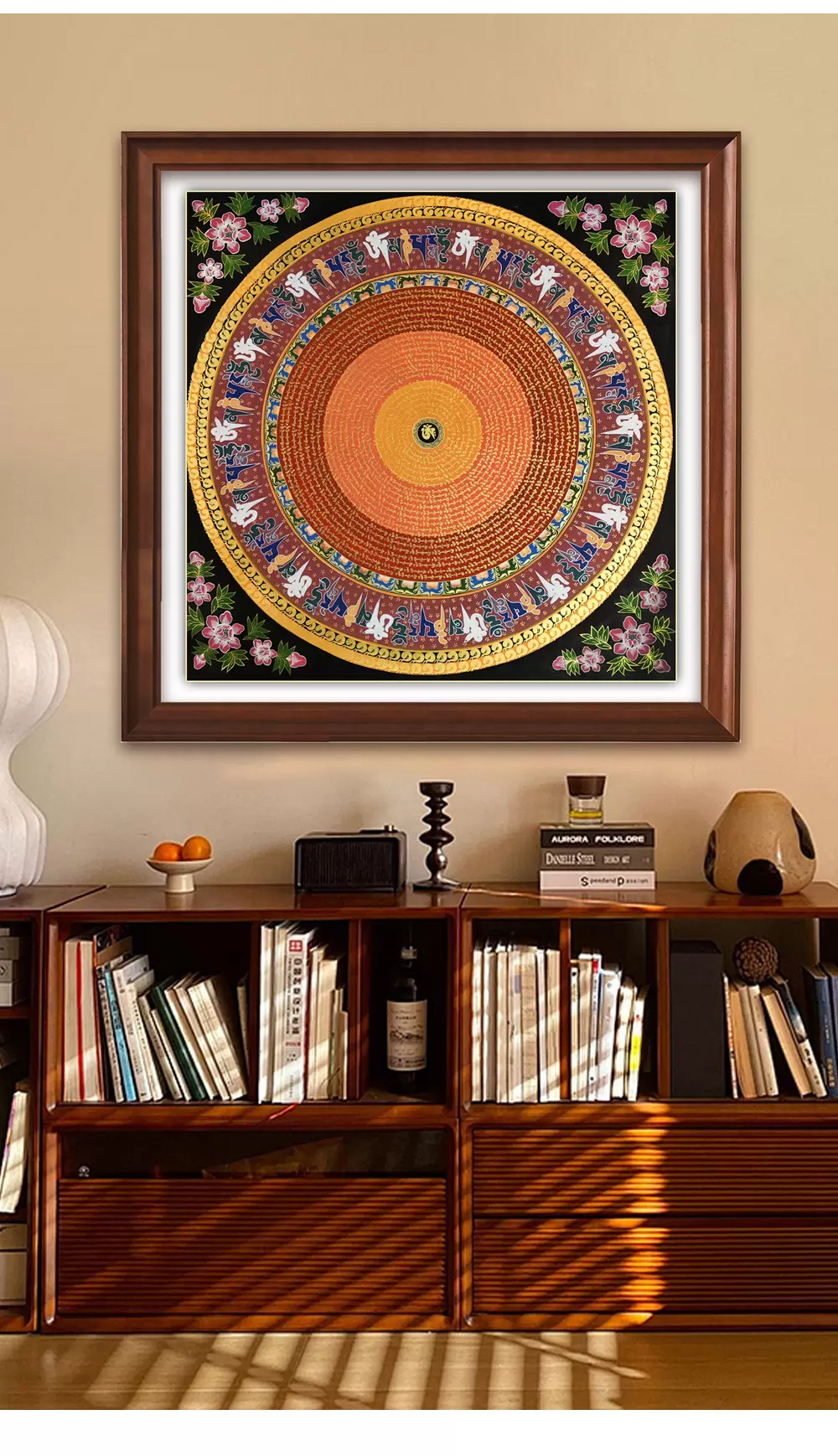
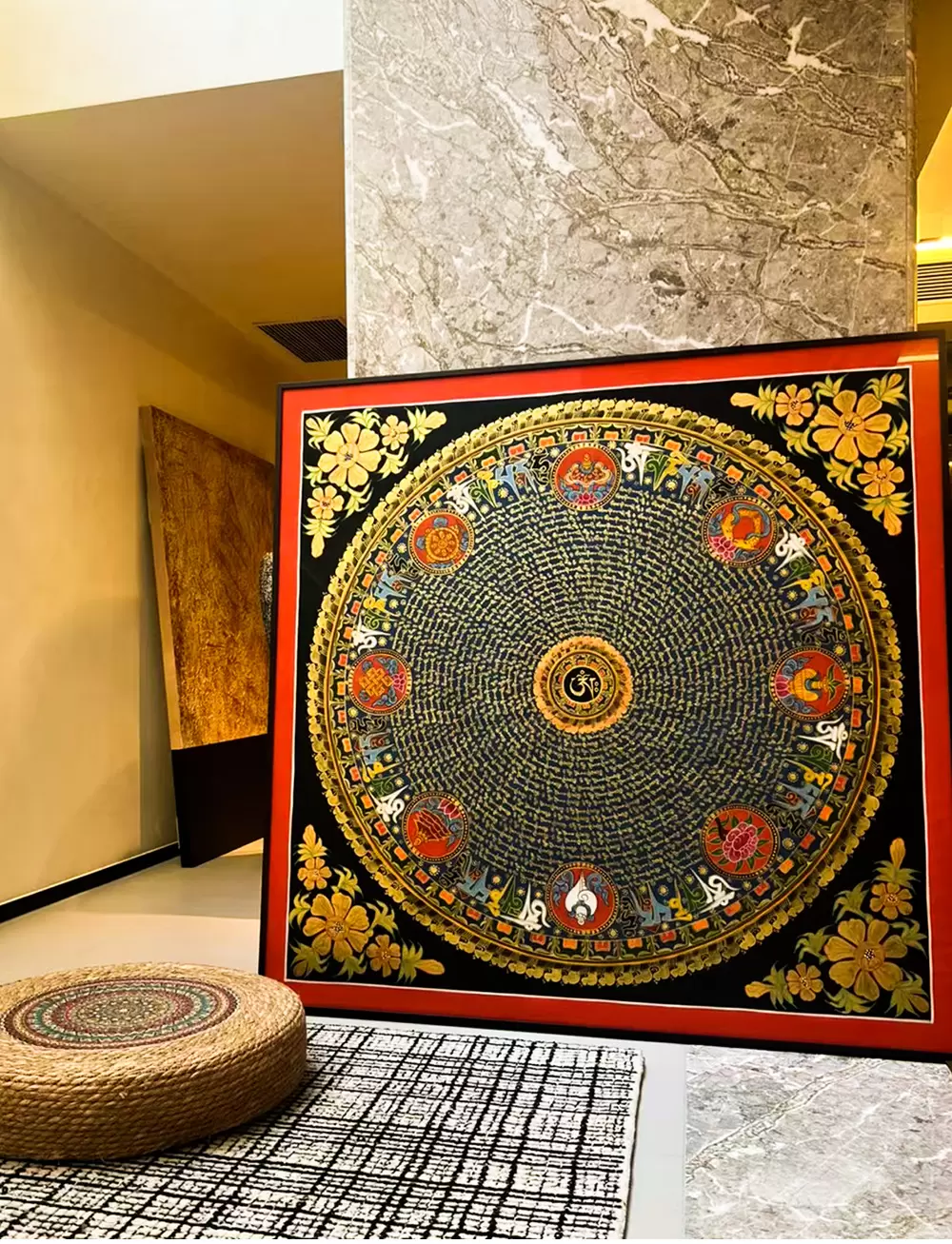
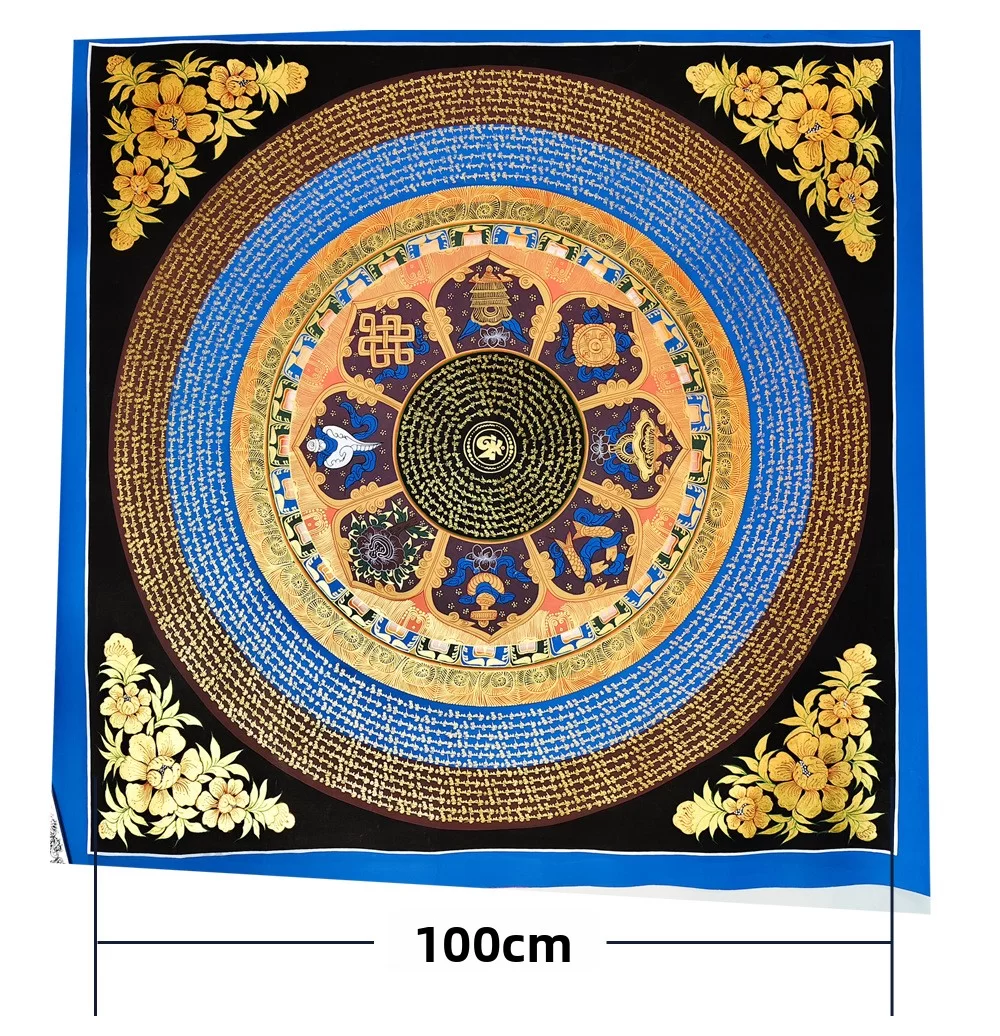
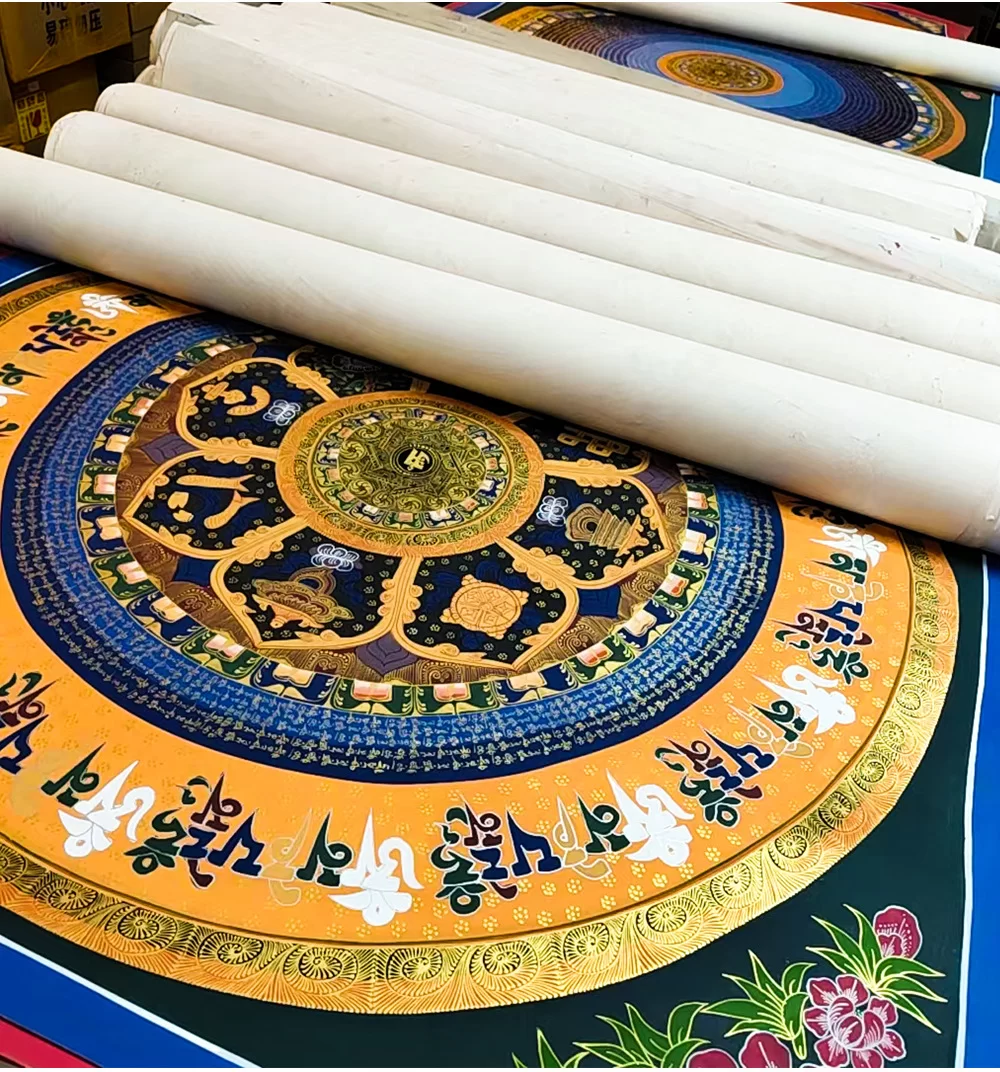
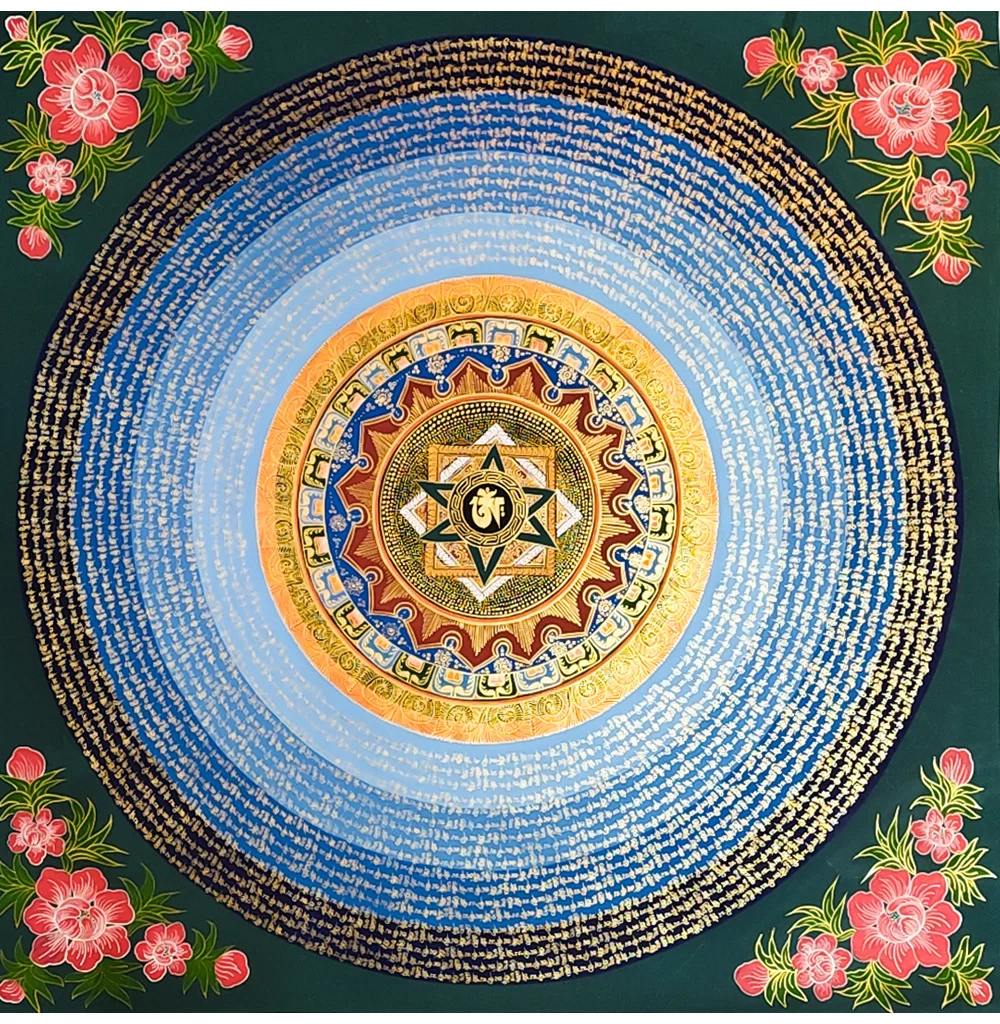
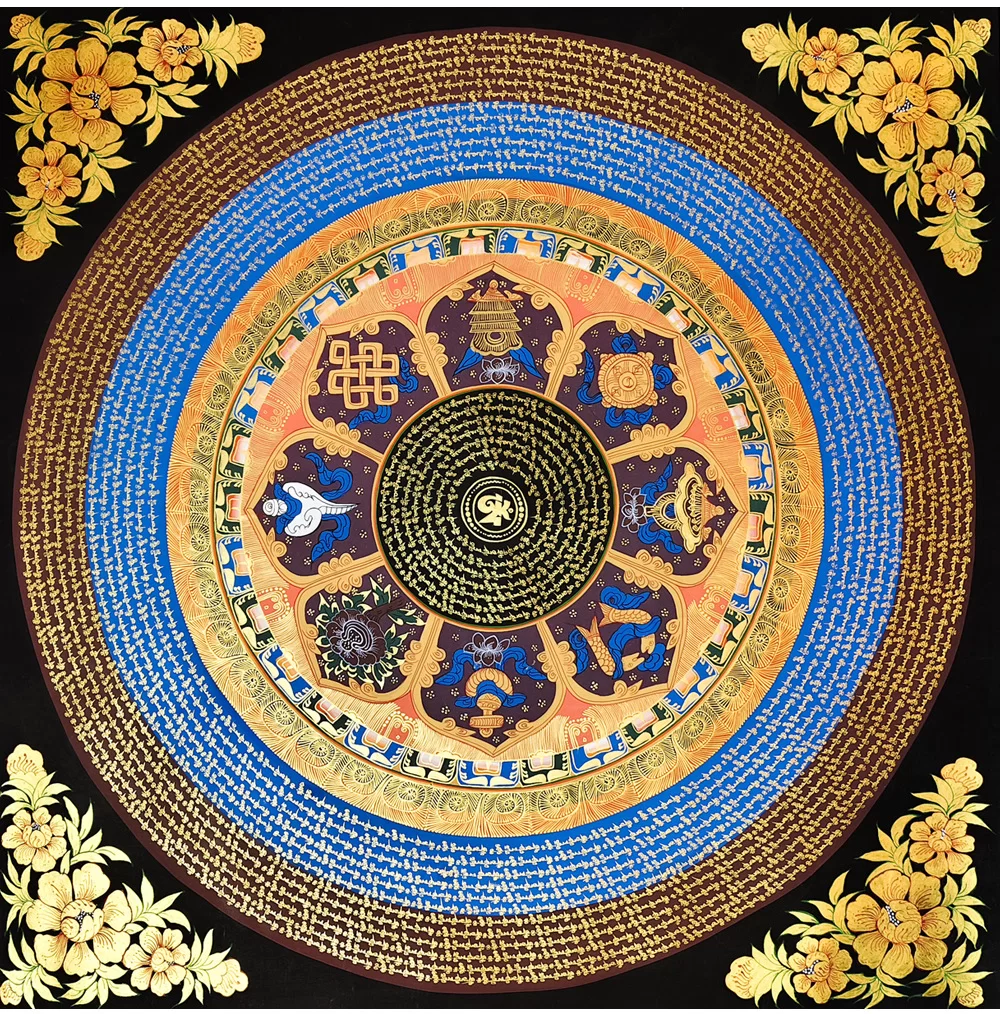
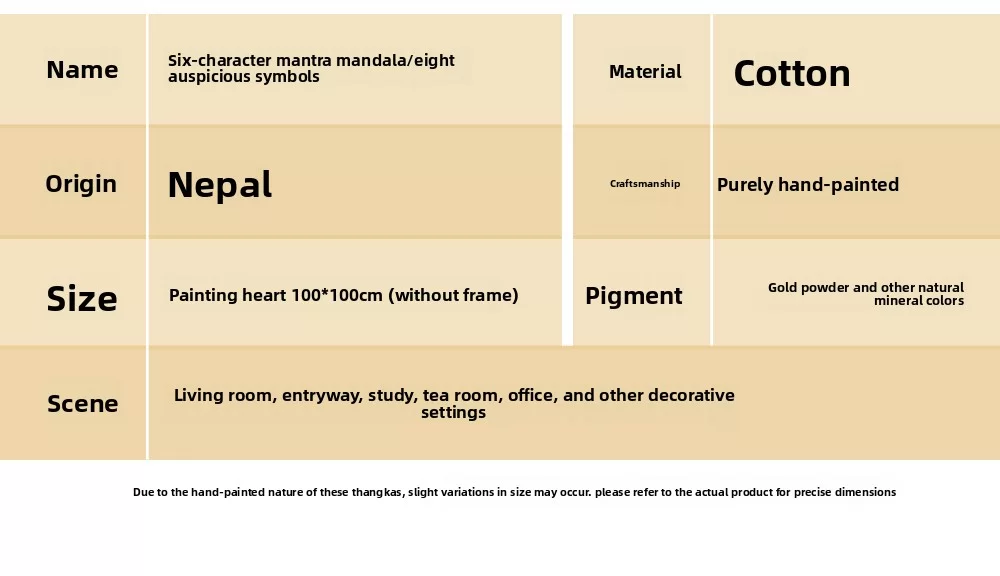
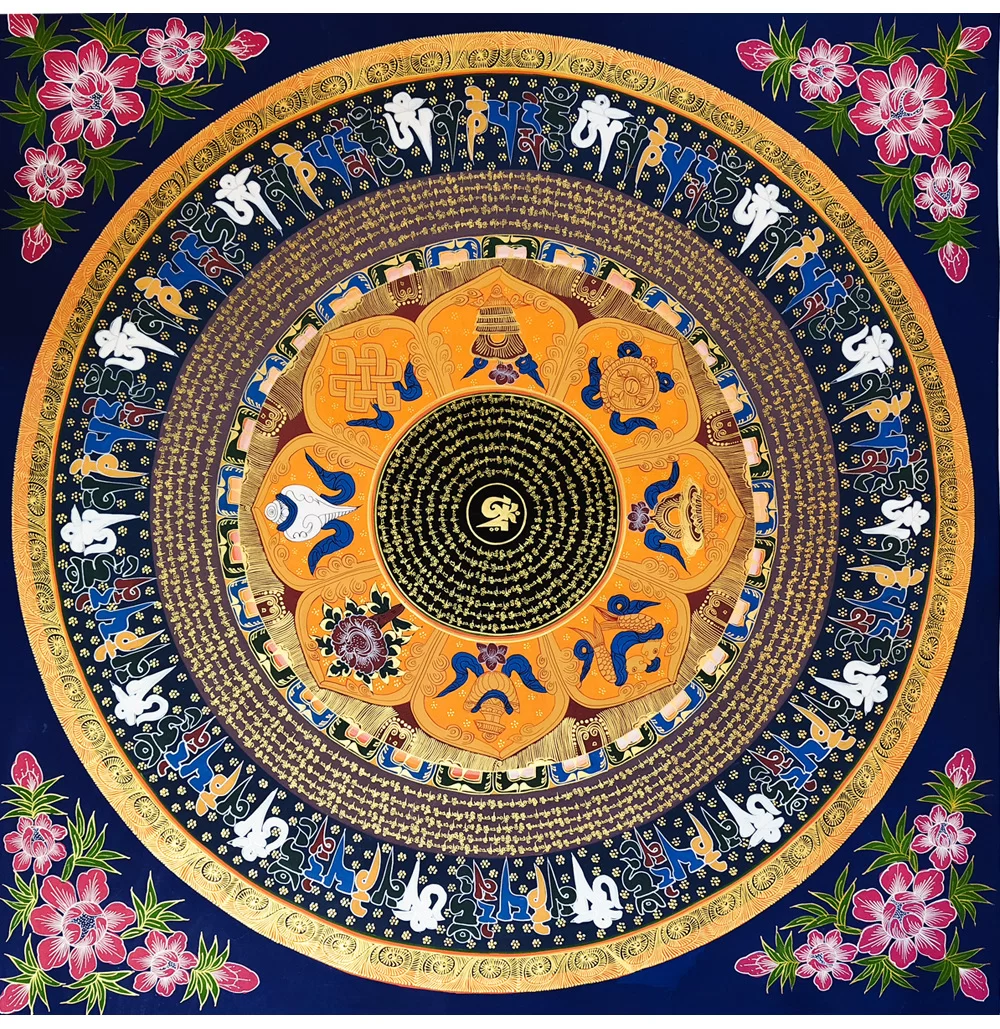
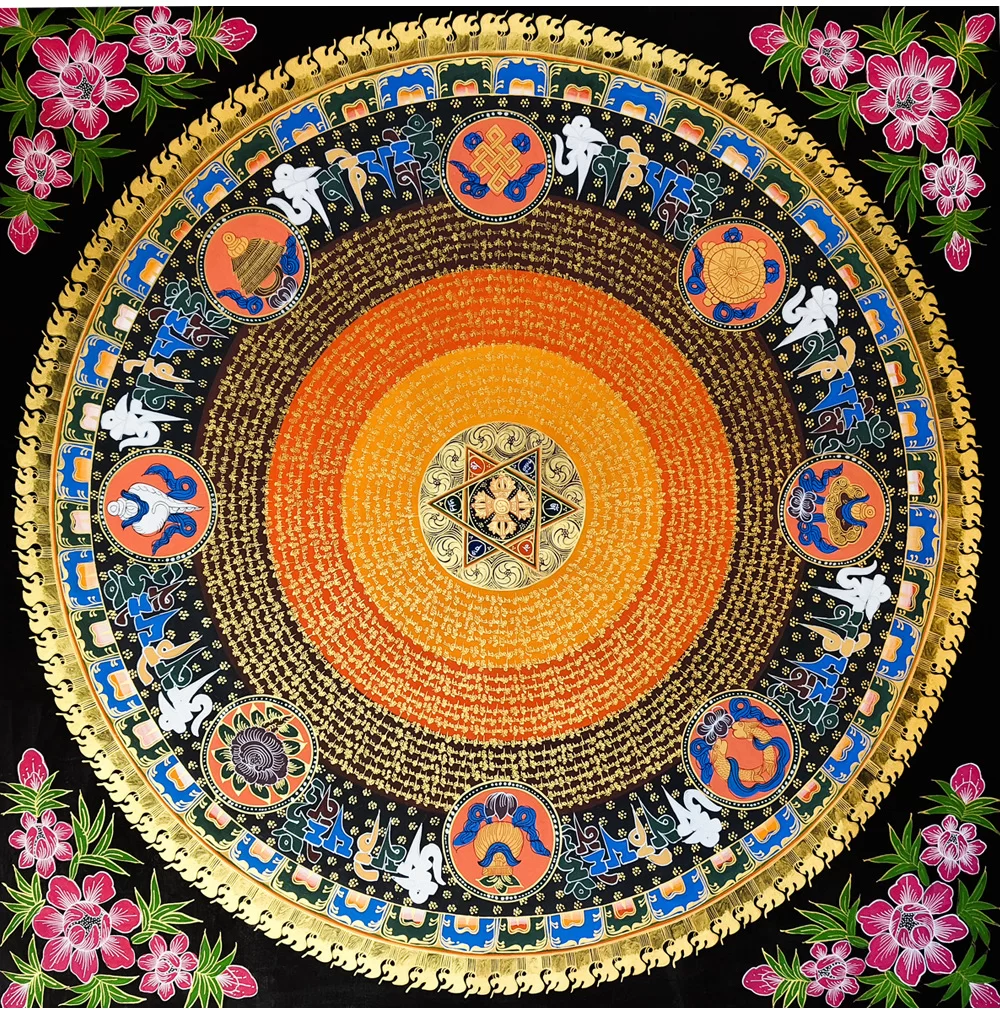
| Material | Hand-painted cotton fabric | Place of Origin | China Tibet |
|---|---|---|---|
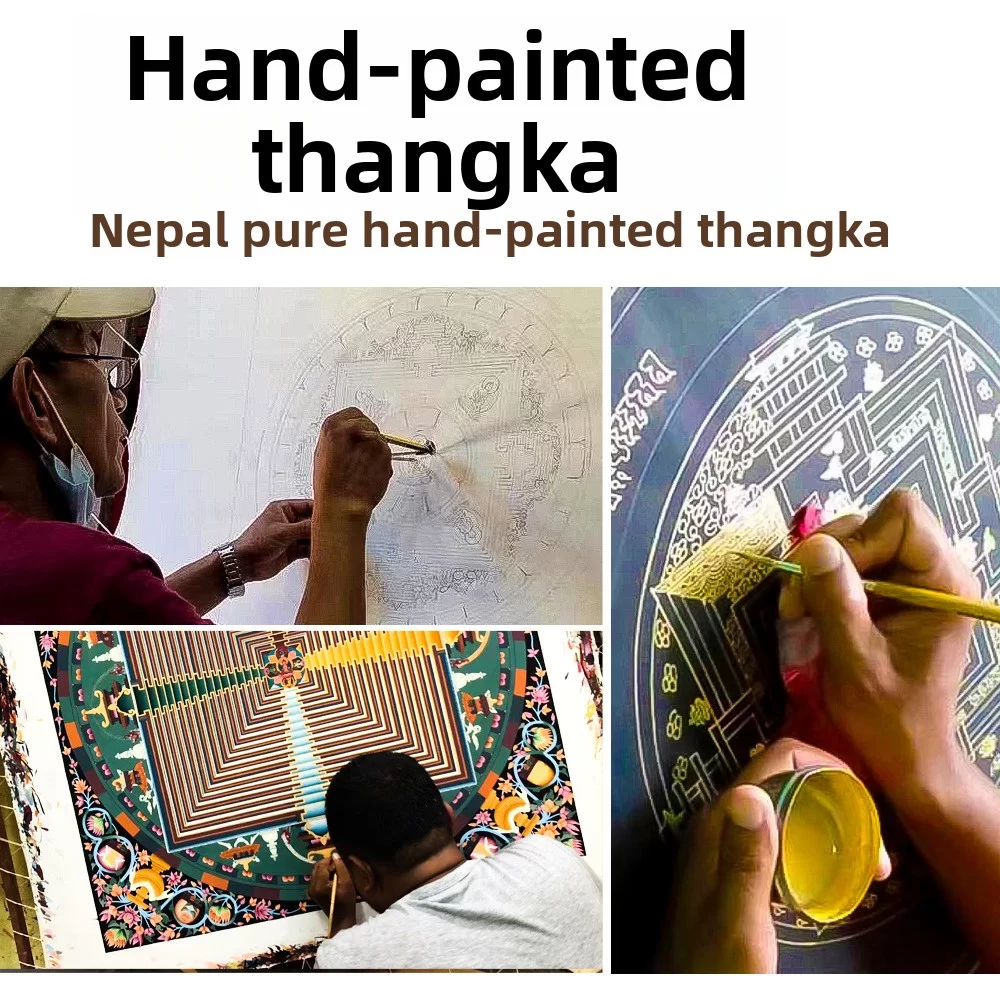
| Manufacturing Process | Hand-drawn | Dimensions | 39.3 in * 39.3 in |
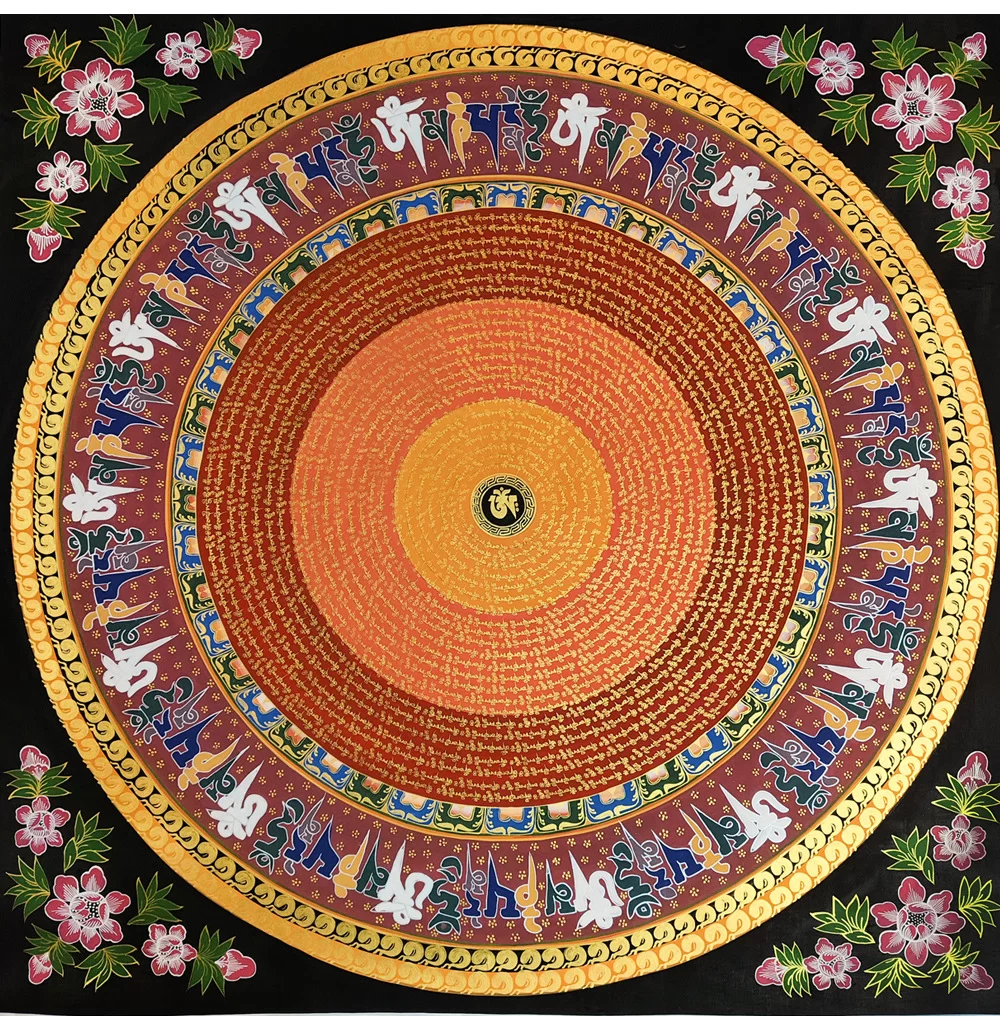
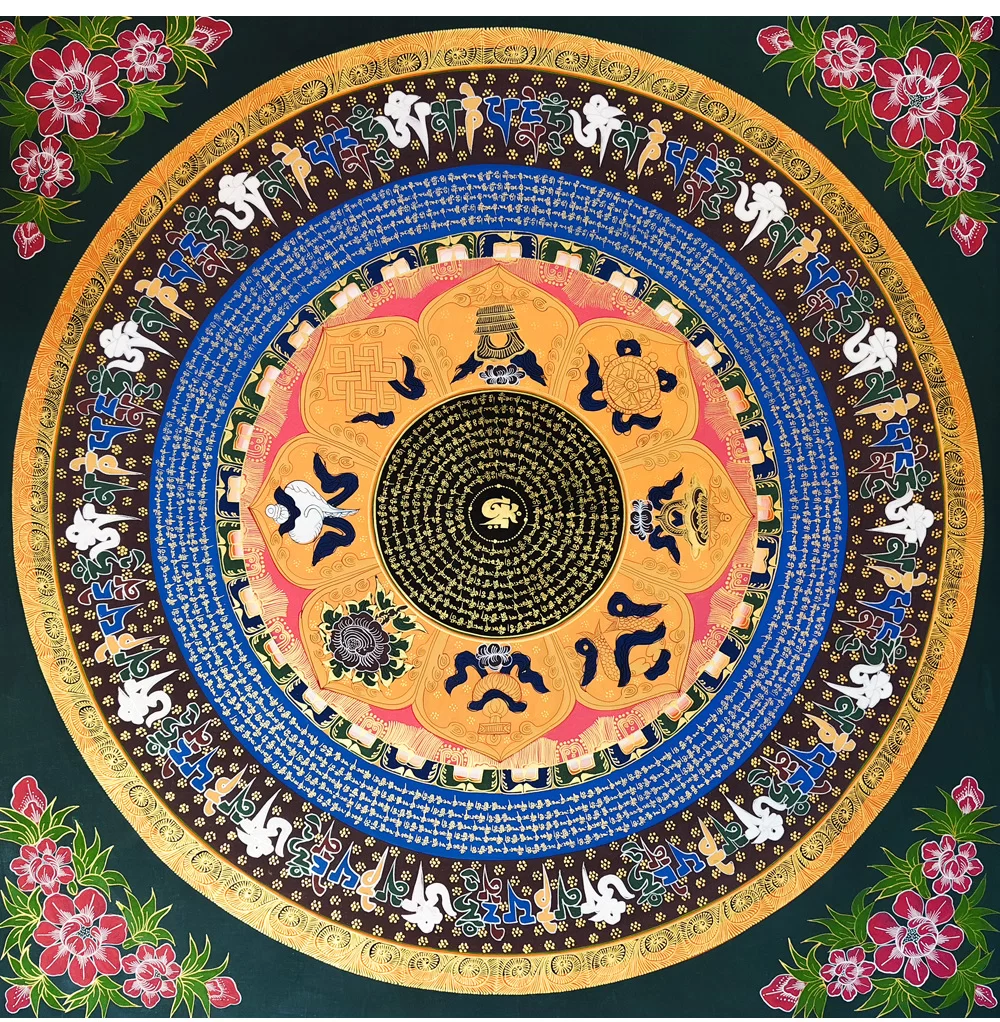
| Specifications | Mantra Mandala of the Six Syllables, Mandala of the Eight Auspicious Symbols |
Early Period (11th–13th Centuries): Thangkas became treasured possessions of monasteries. The six-syllable mantra often appeared as an accessory to images of Avalokiteshvara or other Buddhas and Bodhisattvas. The painting style was influenced by Nepalese art, emphasizing religious solemnity and serving solely for the devotional practices of the monastic community.
Golden Age (After the 15th Century): With the flourishing of various Tibetan Buddhist schools, mantra thangkas emerged as a distinct category. The sacred syllables were rendered in gold against deep blue or crimson backgrounds, often integrated with symbolic motifs like lotus flowers and wish-fulfilling jewels. These works began circulating among noble families and devout lay practitioners.
Modern Era: As a vital component of Tibetan culture’s “visual encyclopedia,” the Six-Syllable Mantra thangka preserves traditional hand-painting techniques (mineral pigments, gold leaf, natural dyes) while evolving into a cultural symbol of faith. It transcends religious boundaries, becoming widely collected and revered.
Religious Dimension: Condensing the core meaning of “purifying karmic obstacles across the six realms and awakening compassionate wisdom,” each syllable corresponds to a specific Buddha family heart, serving as a practice aid for “the threefold correspondence of body, speech, and mind.”
Artistic Dimension: Created by artists over months or even years, these thangkas feature delicate lines and solemn colors, embodying both pictorial aesthetics and artisanal craftsmanship. They are irreplaceable cultural artifacts.